 USD
USD  GBP
GBP  CAD
CAD  AUD
AUD 
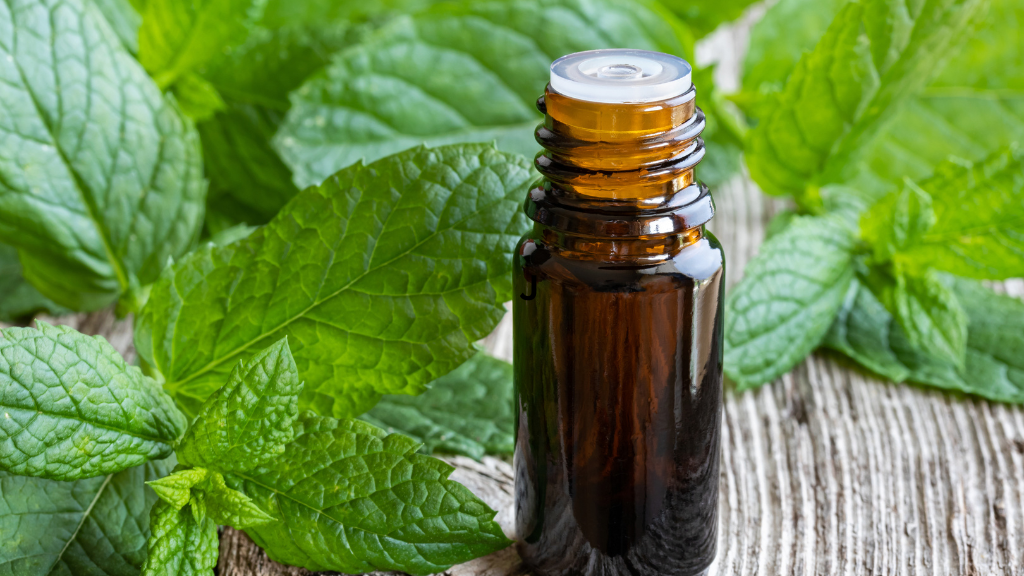
Peppermint essential oil is one of the most recognized oils in the world, and one of the most requested by small business customers across every category. Spa professionals, massage therapists, product formulators, and wellness businesses of all sizes keep it in stock because their customers keep asking for it.
The oil comes from the peppermint plant (Mentha x piperita), a natural cross between watermint and spearmint. Its primary active compound is menthol, which typically makes up 50 to 60% of the oil and is responsible for the cooling sensation you feel when the oil contacts skin. A second major compound, menthone, makes up around 10 to 30%.
Peppermint has been used for centuries to support digestive and respiratory wellness. Modern research, while still limited for some applications, does support several of its most well-known uses. We'll be clear about which benefits have solid research behind them and which are based on traditional use and community reports, so you can talk honestly to your own customers.
Africa Imports stocks peppermint essential oil at wholesale prices in multiple sizes, from retail-ready 1 oz bottles to bulk sizes suited for commercial formulation. This article covers the top 10 benefits, 5 practical ways to use it, and everything you need to know to make it work for your business.
What Makes Peppermint Essential Oil Different
Before getting into the benefits, it's worth understanding what you're actually working with, because not all peppermint products are the same.
Peppermint essential oil is steam distilled from the leaves and flowering parts of the peppermint plant. That process concentrates the plant's active compounds, which is why a little goes a long way and why dilution before skin use is non-negotiable.
Its two primary compounds are menthol (typically 50 to 60%) and menthone (10 to 30%). Menthol drives most of the oil's effects: the cooling sensation on skin, the impact on breathing, and the stimulation of circulation. It's also what gives peppermint its sharp, clean, instantly recognizable scent.
Peppermint essential oil is significantly more concentrated than peppermint extract, which is diluted in alcohol. If a recipe or guide says "peppermint extract," it is not the same product, and the two should not be used interchangeably.
You'll also see different grades in the market: standard, organic, and arvensis (a closely related Mentha species commonly sourced from Asia). Africa Imports stocks multiple grades, so you can choose based on your product needs and price point. Some benefits are backed by solid clinical research. Others are rooted in traditional use and widespread community reports. We'll tell you which is which throughout this article.
10 Benefits of Peppermint Essential Oil

1. May Help Relieve Tension Headaches
This is one of the most well-known and well-researched topical uses of peppermint essential oil, and it's the reason many small business owners carry it as a core product. When diluted in a carrier oil and applied to the temples and forehead, menthol creates a cooling effect that may reduce the sensation of pain.
Some studies suggest that topically applied peppermint oil may perform comparably to acetaminophen for tension headache relief. To be clear, that research is still limited and more studies are needed, but the existing evidence is promising and consistent enough that this is one of the stronger use cases in the literature.
For practical application: dilute 2 to 3 drops in a teaspoon of carrier oil (jojoba and fractionated coconut oil both work well), and apply to the temples, forehead, and back of the neck. Keep it away from the eyes. The cooling sensation from menthol typically kicks in within a few minutes.
This is a use that sells itself. Customers understand what a tension headache is, they want drug-free options, and peppermint roll-ons are an easy, affordable product to make and explain.
2. Supports Digestive Comfort
Of all the uses of peppermint oil, digestive support has the strongest research base. A 2022 review of 10 studies involving 1,030 participants found that peppermint oil in enteric-coated capsules outperformed placebo for overall IBS symptoms and abdominal pain.
One important distinction: those studies used enteric-coated oral capsules, which are a different product from topical essential oil. Do not conflate the two. Africa Imports' peppermint essential oil is not a dietary supplement and should not be used to treat IBS or any medical condition.
That said, diluted peppermint oil applied topically to the abdomen is sometimes used for bloating and general digestive discomfort. Evidence for this specific use is more limited, but it's a traditional application with a long history. Many people find it helpful. Use cautious language with your customers: "may help with" and "some people find relief from" are the right framings here.
3. Soothes Nausea
Inhaling peppermint oil is a traditional remedy for nausea, and some research supports it. A 2024 review of 10 studies on aromatherapy found that inhaled peppermint oil was particularly effective at reducing nausea and vomiting in cancer patients undergoing chemotherapy. Other small studies have shown positive results for postoperative nausea, though findings across studies are mixed.
So does smelling peppermint help with nausea? Many people find that it does. Some studies support this, though the evidence is not yet strong enough for definitive medical recommendations. Inhaling directly from the bottle or diffusing in the room are the most common methods. It's not a replacement for medical treatment, but it's a low-risk, accessible option that many people reach for.
For product makers: personal inhalers (also called aromatherapy inhalers or nasal sticks) loaded with peppermint are a simple, low-cost product that's easy to explain and popular with wellness-minded customers.
4. Opens Airways and Supports Breathing
Menthol's decongestant properties make peppermint oil a common go-to for respiratory discomfort. It's widely used in steam inhalation, where a few drops in a bowl of hot water are inhaled to help with sinus congestion and cold symptoms. The menthol helps loosen mucus and creates the sensation of easier breathing.
Peppermint is also used in chest rubs and massage blends for respiratory support. These are popular retail products, especially during fall and winter. Customers already associate that cooling, minty sensation with breathing easier, which makes peppermint-based chest products an easy sell.
A note on language: this is a topical and aromatherapy use. Do not position any product as a treatment for medical respiratory conditions. Stick to "may help ease congestion" and "traditionally used for respiratory support."
5. Relieves Muscle Aches and Tension
Peppermint oil's antispasmodic properties may help relax muscle tension when applied topically. It's a staple in professional massage therapy, where it's regularly included in massage oil blends for sore muscles, sports recovery, and general tension relief.
For topical body use, dilute at 1 to 3% in a carrier oil: that's 6 to 18 drops per ounce of carrier. This range keeps it effective without risking skin irritation.
Massage therapists and spa professionals are a great market for bulk peppermint oil. Africa Imports stocks sizes that make sense for professional use, so if you work with wellness professionals or want to serve that market, this is a product worth having in your line.
6. Soothes Itchy or Irritated Skin
The cooling effect of menthol may help calm itching from insect bites, minor skin irritation, hives, and rashes. A small study found that a 1% topical solution of peppermint oil led to improvements in both the duration and severity of chronic itch.
Always dilute before applying to skin. A patch test is recommended, especially for anyone with sensitive skin. Do not apply to broken skin or near sensitive areas. This is a use case that fits well into simple skin relief products: cooling sprays, after-bite sticks, or lightweight body oils.
7. May Support Focus and Mental Clarity
Peppermint's scent is widely used in aromatherapy for alertness and energy. Some studies suggest that inhaling peppermint may improve cognitive performance and reduce feelings of fatigue, though the evidence here is still relatively early-stage. It's worth noting as something that may help, not something that will definitely help.
In wellness spaces, diffusing peppermint is a popular way to create an energizing, focused atmosphere. It pairs well with rosemary for a clean, alert-feeling blend.
On the question of whether peppermint helps with cortisol: peppermint is sometimes cited alongside lavender and bergamot in conversations about stress-related fatigue and aromatherapy. The evidence for any essential oil's effect on cortisol is limited and mixed, so steer clear of making cortisol claims. Stick with "may support focus" and "many people find it energizing."
8. Has Antimicrobial Properties
Laboratory research has shown that peppermint oil has antibacterial, antifungal, and some antiviral properties against certain pathogens. That's worth knowing, but it needs context: lab research is not the same as clinical confirmation. The fact that peppermint shows activity against bacteria in a test tube does not mean that diffusing it or applying it topically will protect you from illness.
On the question of whether peppermint is antiviral: laboratory studies have shown antiviral activity against certain pathogens, including some strains of herpes virus, but this is not a medical claim and should not be communicated as one.
Where this does have practical application: surface sprays, cleaning blends, and household products. Product makers who create natural cleaning products or room sprays sometimes use peppermint as part of the formulation, alongside other antimicrobial ingredients.
9. Supports Scalp and Hair Health
Peppermint oil stimulates circulation when massaged into the scalp, which may support hair follicle activity. A 2014 study in mice found that a 3% solution of peppermint oil led to the growth of thick, long hair after 4 weeks, with results comparable to minoxidil. That is animal research, not human clinical data, so treat it carefully. But combined with the evidence that menthol increases skin blood flow, the scalp use case is one of the more credible ones in the hair care space.
For DIY formulators: peppermint is a popular addition to hair growth oils, scalp treatments, edge control, and shampoo blends. Use 2 to 3 drops per tablespoon of carrier oil for a scalp treatment. It pairs well with jojoba oil or argan oil for scalp application.
10. May Help Repel Insects
Menthol and other compounds in peppermint are widely reported to repel ants, spiders, mosquitoes, and other insects. The scent appears to deter them from an area without killing them.
For product makers: a simple insect-deterrent room or surface spray can be made with 10 to 15 drops of peppermint oil in a spray bottle with water. Some sellers add a small amount of alcohol or witch hazel to help disperse the oil. This is a popular low-cost product for pop-up shops and online sellers, especially in spring and summer.
Keep the language accurate: peppermint repels insects, it does not kill them. Position it as a natural deterrent, not a pesticide.
5 Ways to Use Peppermint Essential Oil
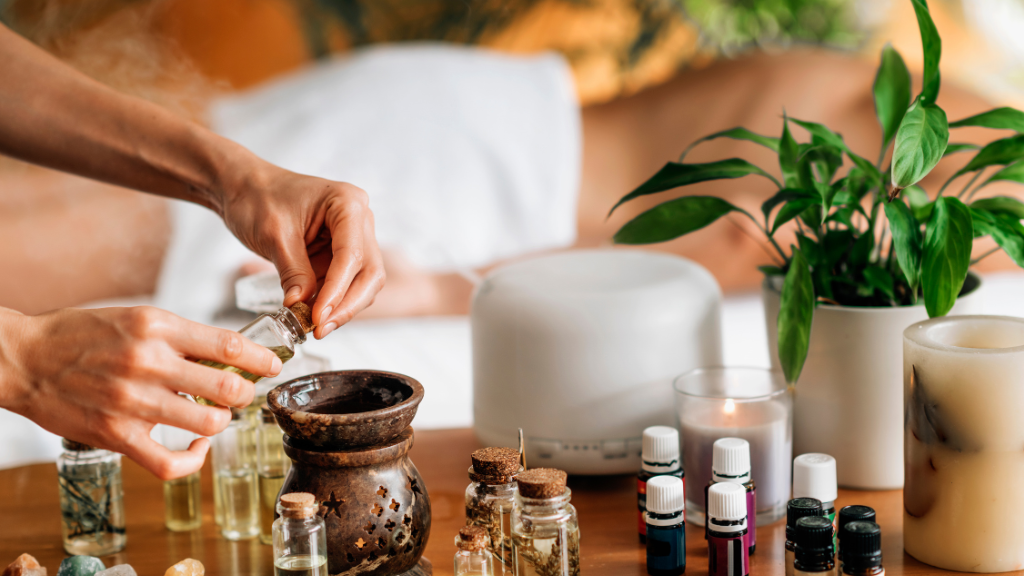
1. Diffuse It for Aromatherapy
Add 3 to 5 drops to a diffuser with water. Peppermint in a diffuser is a simple way to create an energizing, clean-smelling atmosphere. It's popular for focus, respiratory support, and general freshness.
Blending ideas:
- Peppermint and lavender together create a calming-yet-alert combination that many people love.
- Peppermint and eucalyptus make a fresh, clean blend that works well in spa settings.
- Peppermint and lemongrass also pair well: lemongrass's herbal citrus character complements peppermint's cool edge. The combination works in diffuser blends, massage oils, and cleaning sprays.
- Lemon essential oil is another common and popular pairing with peppermint for bright, energizing diffuser blends.
2. Apply Topically for Headache Relief
Dilute 2 to 3 drops in a teaspoon of carrier oil. Jojoba or fractionated coconut oil are both good choices because they absorb well and don't leave a heavy residue. Apply to the temples, forehead, and back of the neck. Keep it well away from the eyes.
The cooling effect from the menthol typically comes through within a few minutes. Many people find this one of the most immediately satisfying applications of peppermint oil because the sensation is noticeable and the product is easy to use.
For sellers: a 10 ml roller bottle with a pre-diluted peppermint blend is one of the easiest products to make and sell. Simple to explain, solves a problem people deal with every day.
3. Add to Massage Oils and Body Blends
For a full-body massage, use peppermint at 1 to 3% dilution in a carrier oil. That works out to 6 to 18 drops per ounce of carrier, depending on how strong you want the cooling effect.
Peppermint works well in blends targeting muscle recovery, sports tension, or cooling massage products. It blends naturally with eucalyptus, lavender, and rosemary for muscle-focused formulas.
Africa Imports stocks peppermint in bulk sizes that make sense for massage therapists and professional product makers. Buying in bulk and blending your own massage oil is a straightforward way to increase your margin compared to buying pre-made products at retail prices.
4. Use in Steam Inhalation or a Bath
For steam inhalation: add 3 to 5 drops to a bowl of hot water, drape a towel over your head and the bowl, and inhale gently for a few minutes. This is a traditional method for easing sinus congestion and respiratory discomfort.
For a bath: add 5 to 10 drops of peppermint oil to a tablespoon of carrier oil or unscented bath gel first, then mix that into the bathwater. Never add essential oils directly to water without a dispersant, as the oil will float on the surface and make direct skin contact without dilution.
Safety note: do not use peppermint bath blends on young children. Menthol can interfere with breathing in infants and small children.
5. Add to Hair and Scalp Products
Add 2 to 3 drops of peppermint per tablespoon of carrier oil for a scalp treatment. Massage into the scalp and leave on for 20 to 30 minutes before washing out, or use as a leave-in treatment at low levels.
You can also mix a small amount into shampoo or conditioner, though the menthol will dissipate more quickly in a rinse-out product.
For product makers: peppermint is a popular and practical addition to DIY hair growth serums, edge control, and scalp oils. It's a recognizable, trusted ingredient that your customers already understand, which makes it easier to explain on a product label or at a pop-up table. Buying peppermint in bulk from Africa Imports and blending it into smaller retail formats is a solid margin play.
How to Use Peppermint Essential Oil Safely
Peppermint essential oil is generally well-tolerated when used correctly, but there are a few things worth knowing before you use it or recommend it to your customers.
Always dilute before applying to skin. Undiluted peppermint oil can cause irritation or sensitization, even in people who don't normally have sensitive skin. The standard dilution for adults is 1 to 3%: 6 to 18 drops per ounce of carrier oil. For facial use or sensitive skin, stay at the lower end.
Do a patch test before full application, especially with a new batch or a new customer's skin type.
Keep peppermint oil away from the eyes, nose, and mucous membranes. It's more irritating in those areas than most other essential oils because of the menthol concentration.
Do not use it on infants or young children. This is a clear safety concern: menthol can interfere with breathing in young children and should not be applied to their faces or chests, or used in products that they could inhale directly. Keep peppermint products stored out of reach of children.
Pregnant or nursing women should check with a healthcare provider before using peppermint oil therapeutically. General food-level exposure is considered safe, but medicinal use is a different matter.
Peppermint oil may affect how certain medications are metabolized in the body. Anyone taking regular prescription medication, including medications for cholesterol, organ transplant anti-rejection drugs, or drugs that affect stomach acid, should talk to their doctor before using peppermint oil therapeutically.
Store in a cool, dark place in a sealed, dark glass bottle. Peppermint oil is photosensitive and can oxidize with exposure to light and heat, which changes both the smell and the effectiveness.
Peppermint Essential Oil for Your Business
Peppermint is one of the best-selling essential oils across every business type we work with: spa owners, massage therapists, candle makers, soap makers, and DIY personal care formulators all stock it, and they reorder it regularly.
Part of why it sells so well is that customers already trust it. They know what peppermint smells like, they have existing associations with it (cooling, clean, refreshing, functional), and they're already looking for products that use it. That makes it one of the easiest ingredients to explain and sell, even at a pop-up table.
Business uses run the full range: headache roll-ons, muscle relief massage oils, insect deterrent sprays, scalp treatments, hair growth serums, bath salts, lip balms, soap, candles, and diffuser blends. A single bulk purchase of peppermint essential oil can supply multiple different product lines.
Africa Imports stocks peppermint essential oil in multiple grades and sizes, from 1 oz bottles for smaller makers through to 1 lb and larger for commercial formulation. Shelf life is typically 3 to 5 years when stored correctly, which makes it a practical bulk-buy item even for businesses that are just getting started.
And every order you place with Africa Imports helps fund real charitable work across Africa, including schools for children who would otherwise go without, medical care, and adult skills training. Over half of our profits go directly to that work.
Peppermint Products That Sell
Peppermint is one of the easiest essential oils to turn into retail-ready products because customers already know and trust it. A few formats that tend to move well at pop-up shops and online:
Headache roll-on: fill a 10 ml roller bottle with 5 drops of peppermint, 3 drops of lavender, and top with jojoba oil. Simple to make, easy to explain, and solves a problem that people deal with every day.
Muscle relief massage oil: peppermint and eucalyptus in a carrier oil, bottled in 2 oz glass. Popular with athletes, massage clients, and anyone sitting at a desk all day.
Refresh room spray: peppermint and lemon in distilled water with a small amount of alcohol or witch hazel to help disperse the oil. Clean-scented, sells well in wellness and home goods settings.
Scalp treatment: peppermint blended into jojoba oil, marketed for scalp stimulation and hair growth support. Pairs naturally alongside other hair oils in your product line.
Buying peppermint in bulk and splitting it into smaller product formats can significantly improve your margin compared to buying retail. Africa Imports bulk sizes make this practical even for newer businesses that are still building out their product line.
Health and Safety Disclaimer:
The information in this article is for educational purposes only and is not intended as medical advice. These statements have not been evaluated by the Food and Drug Administration. Peppermint essential oil products are not intended to diagnose, treat, cure, or prevent any disease. Always consult a qualified healthcare professional before using essential oils for health-related purposes, particularly if you are pregnant, nursing, taking medication, or managing a medical condition.
Frequently Asked Questions
Does smelling peppermint help with nausea?
Many people reach for peppermint as a winter congestion oil, and many also find that inhaling peppermint oil provides relief from nausea, including postoperative nausea and nausea related to chemotherapy treatment. A 2024 review of 10 aromatherapy studies found inhaled peppermint oil was particularly helpful for chemotherapy-related nausea and vomiting. Results from other studies are more mixed. Inhaling directly from the bottle or diffusing in the room are the most common methods. It's not a replacement for medical treatment, but it's a low-risk option many people reach for.
Can peppermint essential oil help with headaches?
Diluted peppermint oil applied to the temples and forehead may help ease tension headaches. The menthol creates a cooling sensation that some studies suggest may reduce headache intensity. It is not a replacement for medical treatment and should not be used to manage chronic or severe headaches without speaking to a doctor first.
Is peppermint essential oil antiviral?
Laboratory research has shown that peppermint oil has antiviral properties against certain pathogens. However, this is mostly lab-based research and does not mean that diffusing peppermint oil will protect you from illness. It should not be used as a substitute for medical treatment.
Do peppermint and lemongrass essential oils go together?
Yes. Lemongrass has an herbal citrus character that works well alongside peppermint's cool, minty edge. The combination works in diffuser blends, massage oils, and cleaning sprays. Lemon essential oil is also a popular pairing with peppermint for bright, energizing diffuser blends.
Is peppermint essential oil safe for children?
Peppermint essential oil is not recommended for use on or around infants and young children. Menthol can interfere with breathing in young children and should not be applied to their faces or chests, or used in products they might inhale directly. Always check with a pediatrician before using essential oils around children.
Can peppermint essential oil affect histamine?
Some people ask whether peppermint essential oil has anti-histamine properties. Early research suggests menthol may have some activity related to histamine response, but the evidence is too limited to make reliable claims. If you have known allergies or sensitivities, do a patch test and talk to a healthcare provider before using peppermint oil topically.