 USD
USD  GBP
GBP  CAD
CAD  AUD
AUD 
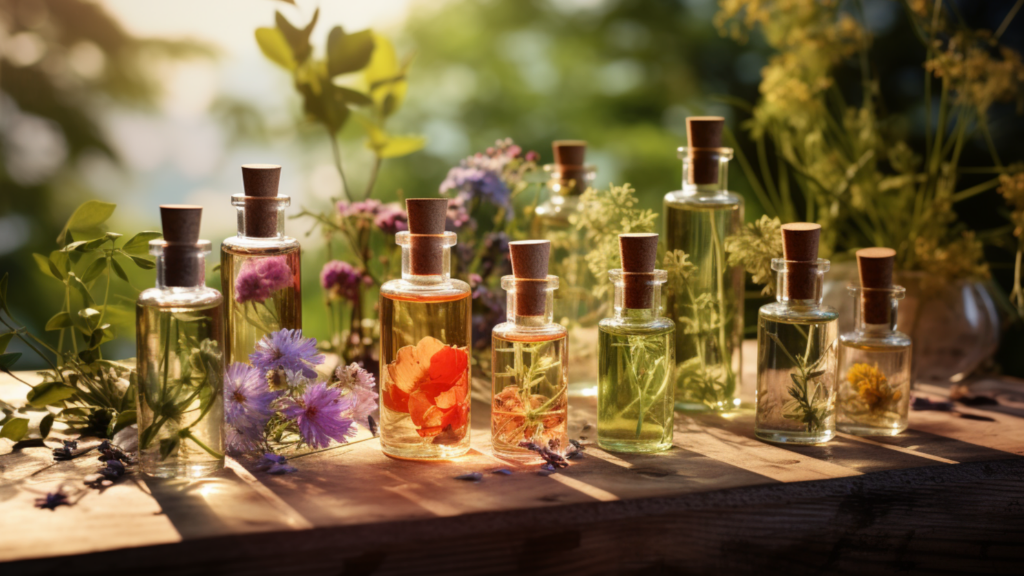
Making your own fragrance oils is one of the few crafts where the setup cost is low and the learning curve is short. You need a carrier oil, a few scent oils, a bottle, and some patience while the blend settles.
This guide walks through the whole process: what goes in, how much of each, and what to do when a blend does not smell the way you hoped. It works whether you are mixing one bottle for yourself or building a product line to sell at markets, online, or through your salon.
If you have been buying finished perfume oils and reselling them, learning to blend gives you something nobody else on the table has: a scent that is yours.
What Is Fragrance Oil?
A fragrance oil is a scent concentrate blended into a carrier oil so it is comfortable to wear on skin. That is the whole definition, and it is also the answer to how perfume oil is made: you take a concentrated scent and dilute it into a base.
The difference from the perfume you buy in a department store is the base. Most shelf perfumes use alcohol, which evaporates fast and can sting. Fragrance oils use a carrier oil instead. They sit closer to the skin, release more slowly, and last longer through the day. People with sensitive skin often find them more comfortable to wear, though anyone can react to any ingredient, so patch testing still matters.
Fragrance oils are not only for personal scent. They go into massage oils, body butters, soaps, lotions, and room products. If you already sell one of those, blending your own scent gives you a signature across the whole line.
Why Make Your Own Fragrance Oil?
For personal use, the appeal is control. You get exactly the scent you want, at the strength you want, in the amount you want. Some people also prefer to avoid synthetic ingredients where they can, and blending yourself means you decide what goes in.
For business, the case is sharper. Buying finished products and reselling them puts you in a price war with everyone else selling the same thing. Blending your own means:
You own the scent. Nobody else stocks it. Your margin is set by your ingredient cost, not by someone else's wholesale list. Small-batch, handmade products are something customers are happy to pay more for. You can build a line around one recognizable house scent across oils, soaps, and butters.
The barrier to entry is genuinely low. A few carrier oils, a handful of scent oils, and some bottles will get you to your first sellable batch.
What You'll Need to Get Started
Carrier Oils, Your Base
The carrier is most of what is in the bottle. It dilutes the scent concentrate and helps it spread on skin.
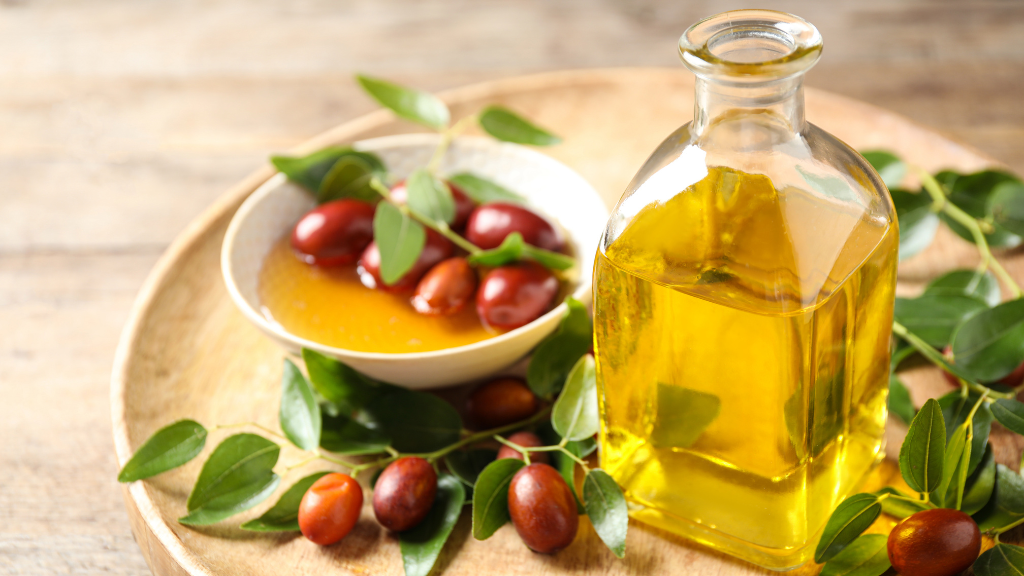
Jojoba is the usual first pick. It is technically a wax rather than an oil, which is why it lasts far longer than most alternatives before going off. It absorbs without a greasy film and it has almost no scent of its own, so it will not argue with your blend.
Sweet almond oil is the budget option. It is light, absorbs quickly, and has a very mild scent. It works well for larger batches where jojoba would push your cost per unit too high.
Fractionated coconut oil stays liquid at room temperature and has a long shelf life, which makes it a reliable choice for roll-ons.
Whichever you choose, buy your carrier oils in a size that matches your batch volume. Small bottles for testing, larger containers once you know what sells.
Fragrance or Essential Oils, Your Scents
This is where the actual smell comes from. Fragrance oils give you the widest range of scents and, more usefully for sellers, they behave the same way batch after batch. Essential oils are plant-derived and vary with harvest, season, and supplier, which makes exact repeatability harder.
Most makers use both. Fragrance oils for the backbone of a blend, essential oils for specific notes they want.
The Supplies
- Small glass bottles, ideally 10ml roll-ons for testing and selling
- A funnel, or pipettes for small amounts
- Droppers for counting scent oil accurately
- Gloves, since concentrated oils can irritate skin Labels, and a notebook or spreadsheet for recipes
That last one is not optional if you plan to sell. More on that below.
Understanding Scent Notes (Top, Heart, Base)
Every good blend is built in three layers.
Top notes are what you smell first. Citrus, mint, light florals, fresh green scents. They are bright, they grab attention, and they fade within about 15 to 30 minutes.
Heart notes, sometimes called middle notes, come through as the top fades. This is the body of the scent: rose, jasmine, lavender, spices, most florals.
Base notes are the foundation. Sandalwood, musk, vanilla, amber, patchouli. They are heavy, they move slowly, and they are still there hours later. They also anchor the lighter notes and slow down how fast everything else evaporates.
A workable split for the scent portion of your blend:
Base notes: roughly 45 to 55 percent
Heart notes: roughly 30 to 40 percent
Top notes: roughly 15 to 20 percent
Add them in that order. Base first, heart second, top last. Heavier oils take longer to disperse through the carrier, so giving them a head start makes the blend more even.
The Simple Ratio: How Much Fragrance to Carrier
The baseline is about 20 percent fragrance oil to 80 percent carrier oil.
The workable range is 10 to 20 percent. At 10 percent you get a light scent that sits close to the skin. At 20 percent you get standard perfume-oil strength. Going much above 20 percent rarely improves anything and raises the chance of skin irritation.
The drop math, using roughly 20 drops per millilitre:
For a 10ml bottle at 20 percent: 2ml scent oil (about 40 drops) and 8ml carrier oil (about 160 drops). For a 10ml bottle at 10 percent: 1ml scent oil (about 20 drops) and 9ml carrier oil. If you prefer counting in round numbers, a 100-drop test batch at 20 percent is 20 drops of scent to 80 drops of carrier.
Splitting those 40 scent drops across your three layers gives you roughly 20 drops of base, 14 of heart, and 6 of top. Adjust from there once you have smelled it.
How to Make a Fragrance Oil: Step-by-Step
Step 1, Choose Your Scent Combination
Decide the mood before you touch a bottle. Who is this for, when would they wear it, and what does it need to smell like on a shelf next to five other bottles? Answering that first saves a lot of wasted oil.
Three combinations that work well for beginners:
Warm and soft: vanilla base, rose heart, bergamot top Fresh and clean: musk base, lavender heart, lemon top Woody and grounded: sandalwood base, cedarwood heart, sweet orange top
Start with one oil per layer. You can complicate it later.
Step 2, Prepare Your Workspace
Work somewhere clean, dry, and well ventilated. Lay out everything before you start: bottles, droppers, funnel, notebook. Wear gloves. Have a paper towel ready, because you will spill something.
Keep the workspace free of other strong smells. Coffee, cooking, and scented candles will all interfere with your nose.
Step 3, Add the Carrier Oil
Some makers add carrier first, some add it last. Adding it first is easier when you are learning, because you can watch how each scent drop disperses. Pour in your measured carrier oil using the funnel.
Step 4, Add the Fragrance or Essential Oils
Base notes first, then heart, then top, following the ratio from the section above. Count every drop out loud if it helps, and write down the count as you go. Not after. As you go.
If you are unsure about strength, start at the lower end. You can always add more scent to a weak blend. You cannot take it back out of a strong one.
Step 5, Shake and Let It Settle
Cap the bottle and roll it gently between your palms for 20 to 30 seconds. Do not shake it hard, which just introduces air.
Then leave it alone. The blend needs time to marry, which is the point where the separate oils stop smelling like separate oils and start smelling like one thing. Anywhere from 2 to 72 hours makes a noticeable difference. Two to three days in a cool, dark place is a good default. Some makers leave complex blends for a week or more.
Step 6, Test, Tweak, and Label
Test on skin, not on paper. Paper tells you what the top note smells like and nothing else. Put a little on your wrist, then check again at one hour and at four hours. That is where you find out whether your base notes are doing their job.
When you are happy, label the bottle with the scent name, the date, and the recipe reference number from your notebook.
Fixing Common Problems
Your blend smells too sharp. Give it longer. Sharp, alcohol-like edges usually smooth out by day three. If it is still sharp after a week, you likely have too much top note. Cut the citrus next time.
Your blend is too weak. Add a few more drops of scent oil, then let it settle another day before testing again. Leaning harder on base notes also helps, since they last longest.
The scent disappears within an hour. Your base note proportion is too low. Citrus-heavy blends fade fastest, so pair them with a solid base like sandalwood, musk, or vanilla.
Your blend smells muddy. Too many oils fighting each other. Strip it back to one oil per layer and rebuild. Most memorable scents are simpler than people expect.
Making Designer-Inspired Blends
A lot of sellers build their first line around designer-inspired scents. These are blends made to bring to mind a well-known fragrance without being that fragrance. They sell well because customers already recognize the scent profile, which shortens the conversation at a market stall.
The rule here is not complicated but it is not optional either. Always describe these as "inspired by" or "an impression of." Never suggest you are affiliated with, endorsed by, or selling the original brand, and never use the brand's logo or packaging style. Africa Imports uses this same framing across our designer perfume oils range for exactly this reason.
Beyond the legal side, it is also just better business. Customers who buy an impression know what they are getting and come back for it. Customers who think they bought the real thing do not.
Tips for Making Fragrance Oils to Sell
Plan the scent before you blend it.
Write down who it is for, what mood it should create, and which product it will end up in. Blending without a target is how you end up with 12 bottles you cannot name.
Start small and stay consistent.
Two or three blends done well beats ten done roughly. Consistency is what brings people back.
Package it properly.
The bottle and the label are doing as much selling as the scent when a customer is standing at your table.
Know your market.
What sells at a summer fair is not what sells online in November. Ask customers what they are looking for and pay attention to what they reach for first.
Price for profit.
Add up your carrier oil, scent oil, bottle, label, and your time. Multiply the total by three or four. That covers your overhead, leaves you a margin, and gives you room to offer wholesale later.
Test across products before you expand.
A scent that smells beautiful in a roll-on can behave differently in a soap or a body butter. Heat, pH, and the base itself all change how a fragrance performs. Test your signature scent in each format before you announce a whole line built around it.
Small Business Tip
If you are planning to sell, buy your carrier and scent oils in bulk from the start. Wholesale pricing is where your profit margin lives.
Work an example. A 1 lb container of sweet almond oil currently runs $19.90, against $9.90 for 4 oz. That is roughly $1.24 per ounce in bulk against $2.48 in the small size, so you halve your base cost by moving up one size.
Split across dozens of 10ml roll-ons, that difference is the whole gap between a thin margin and a healthy one. Check current pricing before ordering, since it moves.
Start with two or three signature blends and document every single drop count. Keep a simple recipe log with the batch date, the exact drop counts, and which supplier lot the oils came from. When a customer comes back in six months asking for "the one that smells like summer," you need to be able to make it identically. That is the difference between a one-time market sale and a repeat customer.
FAQs
What is the best oil to make perfume oil?
There are two oils involved and they do different jobs. For the scent itself, fragrance oils give you the widest range and the most consistent results from batch to batch, which matters if you are selling. For the base, jojoba is the usual pick. Many makers blend fragrance and essential oils together.
What is the best carrier oil for making fragrance oils?
Jojoba is usually the top choice because it has the longest shelf life and absorbs without a greasy feel. Sweet almond oil is a solid budget option for larger batches, and fractionated coconut oil works well for roll-ons since it stays liquid and keeps for a long time.
Can you make fragrance oil using essential oils?
Yes, and the process is identical. Essential oils can be more potent than fragrance oils, so you may need fewer drops to reach the strength you want. They also vary more between batches, so keep notes on your supplier if consistency matters to you.
How do you make fragrance oil stronger?
Add a few more drops of scent oil at a time, then let the blend settle a day or two before testing again. Leaning on base notes also helps, since they last longer than top notes. Avoid going much past 20 percent scent of carrier oil, as stronger is not always better and raises irritation risk.
How long does homemade fragrance oil last?
Stored in glass away from heat and light, most homemade fragrance oils last 6 to 12 months. Jojoba-based blends last longest because jojoba itself resists going rancid. Citrus-heavy scents fade sooner. Always date your labels.
Do clear or dark bottles matter for storing your blends?
Light speeds up how fast oil breaks down, so dark glass gives you more protection. Clear glass does not harm the oil, it just offers no shield from UV. If you use clear bottles, keep your stock boxed and out of direct light.
Can I sell fragrance oils that I make at home?
Yes, but check your local rules first. Most areas allow small-scale cosmetic sales, though some require specific labeling or permits. Farmers markets and online shops are the easiest places to start. Label every product with a full ingredient list and your business contact details.
Health and Safety Disclaimer
This article is for educational purposes only and is not medical or professional advice. Fragrance oils are for external use and should always be diluted in a carrier oil before they touch skin. Always do a patch test before wearing a new blend, and stop use if you notice any redness or irritation. Keep oils away from eyes and out of reach of children. These statements have not been evaluated by the Food and Drug Administration. Our products are not intended to diagnose, treat, cure, or prevent any disease.
Start Blending, and Help Fund Real Change
You have everything you need to mix your first blend. Pick a mood, choose three oils, and start counting drops.
When you stock up on carrier oils, fragrance oils, and bottles from Africa Imports, you are doing more than building a product line. A large part of our profits go to charitable work in Africa, funding schools for orphaned children, medical care, and skills training. Every order helps that work continue.
Shop our fragrance oils and carrier oils and start creating a scent that is yours.