 USD
USD  GBP
GBP  CAD
CAD  AUD
AUD 
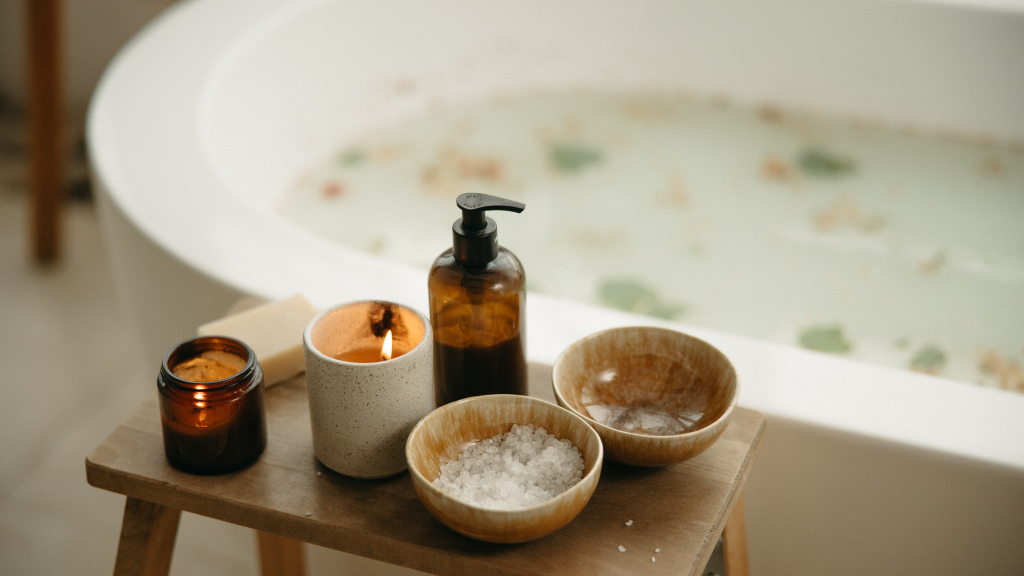
If you make or sell bath salts, one question comes up again and again: should they be scented or not? It sounds simple. It isn't. The words on the label carry legal weight, they shape who buys the product, and they change what the batch costs you to make. This guide breaks down what scented, unscented, and fragrance-free really mean, then shows you how to decide which version to make first and how to build a small range from there.
What Scented and Unscented Actually Mean
Here is the difference in plain terms. Scented bath salts have fragrance added on purpose, whether from essential oils or fragrance oils. Unscented bath salts are made to have no noticeable smell, but they may still contain an ingredient added to cover up the base odor. Fragrance-free means nothing at all was added to give the product a scent.
In the United States, there is no federal legal definition for "unscented" or "fragrance-free" on a cosmetic label. The FDA does not formally define either term, so each maker decides what they mean. That puts the responsibility on you to use the words honestly.
The FDA does define fragrance. It describes fragrance as a substance or blend added to a product mainly to give it a smell. That definition is the reason the next point matters so much.
Here is the practical catch. A customer who reacts to lavender can still react to a product labeled unscented if lavender was masked rather than left out. The smell may be gone, but the ingredient is still in the jar. This is why the label wording is not just marketing. It is safety information your customer relies on.
Why "unscented" can still contain fragrance
A masking agent is an ingredient added to cancel out the raw smell of the base so the product reads as odorless. The scent is covered, not removed. This matters more for bath products than for something like a candle, because a bath salt dissolves into water that a person sits in for several minutes. Whatever is in the jar ends up in the water.
Masking agents still have to appear on the ingredient list. They usually show up as "fragrance." So a jar labeled unscented can still list fragrance in the ingredients, which surprises a lot of customers.
When to say fragrance-free instead
Fragrance-free is the stronger and more honest claim. You can only use it when nothing was added for scent, including essential oils. If you left everything scent-related out, fragrance-free tells the customer exactly that.
Treat it as a labeling standard, not a safety promise. Fragrance-free says nothing was added for smell. It does not guarantee no one will ever react to the product, since people can be sensitive to other ingredients too.
How Bath Salts Differ From Other Scented Products
Bath salts work differently from lotions, body washes, or candles. They dissolve into water that the whole body sits in for 15 to 20 minutes. That is a longer and fuller kind of contact than a product you rinse off in seconds, so the choices you make about scent carry a little more weight.
Salt itself has almost no smell. That is good news for anyone making an unscented version. A cream or an oil-heavy formula often needs a masking agent just to cover the raw smell of its base. A salt base usually does not. This makes a true fragrance-free bath salt easier to produce than a fragrance-free lotion.
The salt you start with sets the natural scent profile. Here is a quick look at the common types. We cover these in more depth in our guide to bath salt types, so this is just the short version.
Dead Sea salt: mineral-rich, very faint earthy smell
Sea salt: clean and nearly odorless Himalayan salt: mild, close to scentless
Epsom salt: technically a mineral, not a true salt, and essentially odorless
Because these bases start out so neutral, they take added scent well and hold a clean result when you leave scent out. If you want to stock any of these as a base, you can find wholesale bath salts ready for resale or blending.
Scented Bath Salts: What They Offer and Who They Suit
For a large share of customers, the scent is the product. A pleasant smell is often what makes a bath salt feel worth paying for instead of something a person could throw together at home with a bag of Epsom salt. Scent is the value they are buying.
Scent also gives your product line a shape. You can build a relaxing blend, a fresh or energizing blend, and a seasonal blend. That structure is what lets you sell four products instead of one, all from the same base.
There are two main ways to add scent. The first is essential oils, which come from plants. The second is fragrance oils, which are blended for scent. Fragrance oils generally hold their scent longer in salt, while citrus essential oils tend to fade fastest. Both have a place depending on the product and price point you are aiming for.
Popular scents worth stocking include:
- Lavender, a steady seller for relaxing blends
- Eucalyptus, often chosen for a fresh, clearing feel
- Chamomile, soft and calming
- Citrus blends, bright and energizing
- Sandalwood, warm and grounding
Who are scented salts suited to? Customers without known fragrance sensitivities, gift buyers who want something that smells nice out of the jar, and spa or salon retail shelves where scent helps sell the experience. If you plan to blend your own, you can browse wholesale essential oils to build your relaxing and fresh lines.
The trade-off with scent
Scent adds appeal, but it comes with a trade-off worth being upfront about. Fragrance is one of the most common contact allergens in cosmetics. Some people find that scented products cause irritation on sensitive skin, and research suggests fragrance is a frequent trigger for reactions. Keep your language careful here. Never tell a customer a product will or won't cause a specific condition.
Do not assume "natural" means gentle. Certain essential oils are among the more common irritants, so a plant-based scent is not automatically the safer choice. If you plan to pre-blend oils into a scented salt, a light carrier oil can help the scent disperse more evenly through the batch. You can source wholesale carrier oils for that step.
Always tell customers to carry out a patch test. A simple line on the label, asking them to try a small amount on the inside of the wrist before a full bath, protects them and protects you. For fragrance oils that hold their scent well in salt, our perfume oils are a common starting point.
Unscented Bath Salts: What They Offer and Who They Suit
It is easy to assume unscented salts are only for people with reactive skin. Sensitive skin is a real part of the market, but it is far from the whole of it.
Some of the biggest buyers of unscented salt include:
- Massage therapists and estheticians who cannot have a scent competing with their treatment oils
- People who work in scent-restricted places like hospitals, dental offices, and some schools
- Customers buying a gift for someone whose scent preferences they do not know
- Anyone who likes to add their own oils at home and wants a clean base to start from
There is a business reason to like unscented salt too. It is the cheaper product to make. No fragrance cost, no dispersant, and no extra drying step after adding oils. That is a margin advantage most sellers overlook.
There is also a resale angle. Unscented base salt is exactly what other makers buy to scent themselves. If you sell to crafters and small formulators, a clean unscented base can become one of your steadiest sellers.
How to talk about unscented on your label
Labeling honestly here keeps customers safe and keeps you out of trouble. A few simple rules:
If you added nothing for scent, use fragrance-free. It is the clearer claim. If you used a masking agent, use unscented and list that ingredient. Skip "hypoallergenic" and "for sensitive skin" as shortcuts. Neither term is federally defined, and both invite complaints you cannot easily defend.
Scented vs Unscented Bath Salts Compared
Here is a side-by-side look to help you decide what to make and how to price it.
|
Feature |
Scented |
Unscented |
|
What is added |
Essential oils or fragrance oils |
Nothing, or a masking agent only |
|
Best for |
Gift buyers, spa retail, customers who want an experience |
Sensitive skin, therapists, scent-free workplaces, DIY blenders |
|
Cost per batch |
Higher, from added oils and extra steps |
Lower, fewer ingredients and steps |
|
Shelf life notes |
Scent can fade over time, especially citrus |
Very stable, little to fade |
|
Labeling claim to use |
Name the scent and list all ingredients |
Fragrance-free if nothing added, otherwise unscented |
|
Repeat purchase driver |
The scent they loved last time |
Reliability and a clean base |
|
Main risk |
Fragrance is a common irritant |
Seen as plain if not marketed well |
Which One Should You Make First?
If you are starting out, begin with the unscented base. It has the fewest ways to go wrong, the lowest cost, and it is the version you can add scent to later. You are not locking yourself in.
From there, add two scented versions, not six. One relaxing blend and one fresh or energizing blend covers most of what customers want without spreading you thin.
The batching logic is the part that saves you money. Mix your whole base unscented, split it, then scent the portions. One batch becomes three products: the unscented base plus two scented blends. You buy once and sell three ways.
Keeping an unscented option next to your scented ones also answers a question customers ask all the time, and it costs almost nothing to stock. Label every product with its full ingredient list and a patch test instruction, no matter which version it is.
FAQs
What is the difference between scented and unscented bath salts?
Scented bath salts have fragrance added on purpose, from essential oils or fragrance oils. Unscented bath salts are made to have no noticeable smell, though they may contain an ingredient added to mask the base odor. The scent may be gone, but a masking ingredient can still be present in the jar.
Is fragrance-free better than unscented?
It depends on what you need. Fragrance-free means nothing was added for scent, so it is the clearer claim for customers avoiding fragrance. Unscented can still contain a masking agent that shows up as fragrance on the label. If you want to avoid added scent entirely, fragrance-free is the safer word to look for.
Are unscented bath salts really free of fragrance?
Not always. Unscented means the product has no noticeable smell, but a masking agent may have been used to cover the base odor. That agent often appears as a fragrance on the ingredient list. If you need nothing added for scent at all, look for fragrance-free instead.
Which bath salts are best for sensitive skin?
Many people with sensitive skin choose fragrance-free salts to avoid added scent, which is a common irritant. A plain salt base with no fragrance and few extra ingredients is often the gentlest option. Everyone is different, so a patch test before full use is always a good idea.
Can I use essential oils in bath salts for sensitive skin?
You can, but be careful. Essential oils are natural, yet some are among the more common skin irritants. If you make a version aimed at sensitive skin, many makers leave scent out entirely or keep it very light. Always include a patch test instruction on the label.
Do scented bath salts lose their smell over time?
Yes, scent can fade, especially with citrus essential oils, which are the quickest to weaken. Fragrance oils tend to hold their scent longer in salt. Storing salts in an airtight container away from heat and light helps the scent last longer on the shelf.
Should I offer both scented and unscented versions?
For most sellers, yes. Offering both answers a question customers ask constantly and costs very little to stock, since you can split one unscented batch and scent part of it. It also lets you serve sensitive-skin buyers and scent lovers from the same product line.
Health and Safety Disclaimer
The information in this article is for education only and is not medical advice. Bath salts and the ingredients in them have not been evaluated by the FDA for treating any condition. Anyone with a skin condition, a known fragrance allergy, or an ongoing health concern should speak with a doctor before using new bath products. Always carry out a patch test before full use.
Stock the Base and Build Your Scent Range
The smartest way to start is with a clean unscented base, then grow a small scented range from it. You keep your costs down, you serve more kinds of customers, and you give yourself room to expand as you learn what sells. When you are ready to stock up, take a look at our bath salts and essential oils to build both sides of your line.
Every wholesale order does more than fill your shelves. Over half of Africa Imports' profits fund schools, medical care, and skills training in Africa. When your business grows, that work grows with it.