 USD
USD  GBP
GBP  CAD
CAD  AUD
AUD 
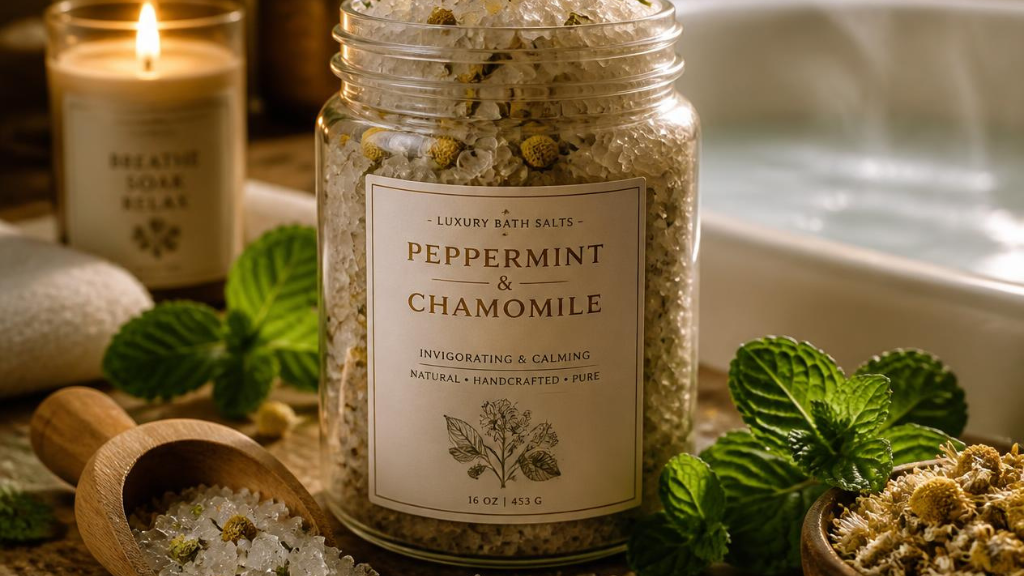
You are blocked up. Your head aches, your chest feels tight, and you haven’t slept properly in two nights. One of the recommended remedies you come across is to run a hot bath with plenty of steam and some soothing bath salts.
Although taking a bath won’t cure your cold, what it may do is help with making you feel less congested. Baths are also very relaxing, especially before bed, so if you’re able to get some proper sleep, then this can help you recover more quickly.
This guide covers how much salt to use, how long to soak, what to add to the water, who should skip it, and what to do if you do not have a tub. If you sell bath and body products, the last section shows you how to turn a cold season soak into something you can put on a shelf.
Does a Bath Actually Help With Congestion?
Sitting in a warm bath when you are blocked up does feel good, especially if you’ve used any essential oils like eucalyptus. Your nose loosens a little, the steam takes the edge off the ache, and it certainly helps you feel more relaxed.
What’s not true, though, is the idea that taking a warm bath will help “wash the cold” out of your system. It would be great if getting rid of a virus was that simple, but unfortunately it just doesn’t work that way.
Researchers have looked at whether warm, humid air does anything to a cold, and the results were weak and inconsistent from one study to the next. There was no measurable effect on the virus itself.
What the salt is actually doing
Most articles about a bath for congestion claim that salt delivers magnesium through your skin. It is worth knowing where that claim comes from.
The main study behind it used 19 people, had no control group, was never peer reviewed, and was published by a trade body that sells the salt. Later work has not backed it up. A recent lab study measuring how much magnesium moves through intact skin found roughly 0.04 percent of the applied dose crossed after 24 hours, which is not meaningfully different from nothing.
So what is the salt doing? It changes how the water feels against your skin. It dissolves cleanly. It carries scent through the steam. Those things are real, and for a comfort soak they are enough.
How to Take a Bath for Congestion, Step by Step
- Fill the tub with warm water, not hot. Around 92 to 100 degrees Fahrenheit. Test it on your elbow as you would when testing a baby’s bath water.
- Add the salt under running water. One to two cups for a standard tub. Stir it with your hand or foot until it dissolves.
- Add scent the safe way. Never drop essential oil straight into the water. Blend it into the salt first, or dilute it in a carrier oil.
- Soak for 15 to 20 minutes. Longer is not better. It just dries your skin out.
- Drink water before and after. A warm bath costs you fluid, and a runny nose is already costing you some.
Get out right away if you feel dizzy, faint, or start shivering. Shivering means your body is trying to raise its temperature, which is the opposite of what you want from a warm soak.
How much bath salt to use
One to two cups per standard tub is the general recommendation. For a foot soak, a quarter cup in a basin of warm water does the job and takes far less effort when you feel terrible.
H3: How long to soak in bath salts
Fifteen to 20 minutes is the standard. If you are trying a new blend for the first time, keep it shorter and see how your skin responds before you commit to a full soak.
Two to three times a week is plenty. Daily soaking dries skin out, especially in winter when the air in your home is already dry.
What to Put in a Bath for a Cold
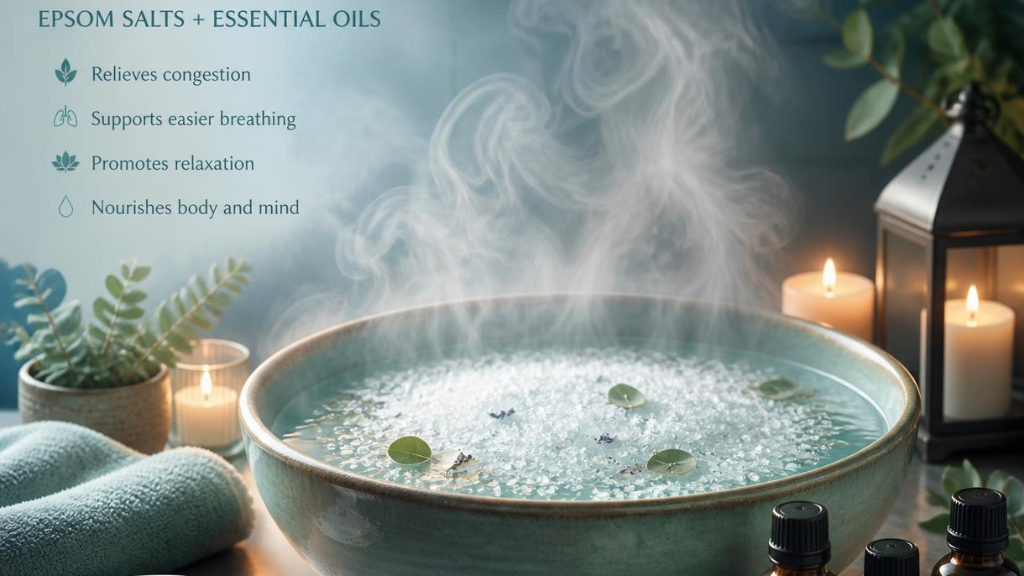
Which salt to choose
Epsom salt is the most widely available option and the one most recipes name. It is cheap, it is in every drugstore, and it dissolves fast. If that’s what you have in the cupboard, use it.
Dead Sea salt is the other common choice. It comes in a coarse grain, and it has a long history in spa and skin care work. Africa Imports stocks it in bulk bags, which is the option that makes sense if you’re soaking regularly or making products to sell.
Plain sea salt or table salt works too. It is the least interesting of the three, but it’s just as effective, and most people have this in their homes already.
Eucalyptus and other scents
Eucalyptus is the scent most people reach for during cold and flu season. Its main component is 1,8-cineole, and it has a long history of use in steam inhalation for winter comfort. Although it can provide some relief from the symptoms of a cold, it won’t cure or shorten it.
Peppermint contains menthol, which many people associate with the feeling of easier breathing. Lavender does nothing for congestion but may help you settle in the evening, which matters when a blocked nose is keeping you awake.
Like any other oil, essential oils do not mix with water. Dropped straight into a tub, they float on the surface and sit against your skin undiluted, which can irritate or burn. Always blend them into the salt first, or dilute them in a carrier oil before they go anywhere near the water.
Keep the total to a few drops per bath. Some recipes online call for 40 to 60 drops across one batch of salts. That is far too much for skin contact in warm water.
Who should skip the salt bath
- Anyone pregnant, and children, unless a doctor says otherwise
- Anyone with kidney problems, diabetes, or a heart condition should check with a healthcare provider first
- Skip it if you have open cuts, broken skin, or a rash
- Skip it if you feel faint or unsteady, and sit down in a warm shower instead
- If you have a fever, do not use hot water
See a healthcare provider if a fever runs above 101.3 degrees Fahrenheit or lasts more than a few days, or if you have shortness of breath, wheezing, or severe sinus pain.
No Tub? Try the Shower Instead
Plenty of homes do not have a bathtub, and almost every article on this topic assumes one. Here is what works without it.
Sprinkle half a cup to one cup of scented salts across the shower floor before you turn the water on. The steam picks up the scent as it rises. You get the same warm, humid air without needing to sit in it.
You can also hang a bundle of eucalyptus from the showerhead, or use a scented bar soap like eucalyptus and let the lather do the work. None of it is doing more than the bath was. It just costs you less water and less time.
Comparison Table
|
Epsom salt |
Dead Sea salt |
Table or sea salt |
|
|
What it is |
Magnesium sulfate |
Salt harvested from the Dead Sea |
Sodium chloride |
|
Typical use per bath |
1 to 2 cups |
2 tablespoons to 1 cup |
1 cup |
|
Texture |
Fine, dissolves fast |
Coarse grain |
Varies |
|
Common in |
Muscle soak recipes |
Spa and skin care use |
Basic soaks and scrubs |
|
Sold by Africa Imports |
No |
Yes, coarse grain, 10 lb and 55 lb bulk bags |
No |
Small Business Tip: Turning a Congestion Soak Into a Product
Cold and flu season is the most reliable annual spike for anything labeled "breathe easy." Spa owners, massage therapists, soap makers, and market vendors all see it, and most of them are buying finished products at retail prices when they could be making it.
The margin comes from the bag size
A 55 lb bag broken down into 8 oz retail jars gives you roughly 110 units from a single purchase. A 10 lb bag gives you about 20. Same product, very different cost per jar, so buy the largest bag your storage and cash flow allow.
Note that the 55 lb bag ships separately at a flat rate, so factor that into your first order rather than being surprised by it.
Package in airtight glass jars
Bath salts pull moisture from the air and lose scent fast in anything that does not seal. You can source containers from the jars and packaging range.
Season the name, not the ingredient
"Winter Breathe Soak" sells better on a market table than "Eucalyptus Bath Salt," because customers buy the moment, not the botanical.
Do not put health claims on your jars
No "relieves congestion," no "clears sinuses," no "treats colds." A cosmetic product that makes disease claims is regulated as a drug, and that is a line you do not want to cross as a small business.
Describe the scent and the experience instead. Include a full ingredient list and usage instructions on every jar. Cosmetic labeling rules also vary by state, so check your own before you sell.
For the full method, including ratios and drying times, see our existing guide on making bath salts with fragrance oil.
FAQs
Does an Epsom salt bath work if the water is cold?
No. Whatever comfort a congestion bath offers comes from the warm water and the steam, not from the salt. Cold water gives you neither, and being cold while unwell is miserable. Aim for comfortably warm, around 92 to 100 degrees Fahrenheit.
Is Epsom salt good for colds and flu?
Many people find a warm salt bath comforting when they are achy and blocked up, and Epsom salt is cheap and easy to find. What it will not do is shorten a cold or clear a virus. Claims that it boosts your immune system or speeds up recovery are not supported by real evidence.
Does Epsom salt clear a stuffy nose?
Not by itself. The steam rising off a warm bath adds moisture to the air you are breathing, and many people find that makes breathing feel easier while they are in the room. That effect is temporary, and it comes from the water rather than the salt.
How do you flush out a cold faster?
You cannot. A cold is a viral infection and it runs its course, usually in seven to ten days. Nothing you add to a bath changes that. Rest, fluids, and time are what actually help manage the symptoms. See a healthcare provider if symptoms last beyond ten days or start getting worse.
How much bath salt should you use for congestion?
One to two cups in a standard tub, added under running water so it dissolves properly. For a foot soak, a quarter cup in a basin.
How long should you soak?
Fifteen to 20 minutes. Longer dries your skin. Two to three times a week is plenty, and get out sooner if you feel lightheaded.
Can you take a bath with a fever?
Use lukewarm water rather than hot, and do not bathe alone if you feel unsteady. If you start shivering, the water is too cool and your body is working to raise its temperature, so get out. Speak to a healthcare provider about a fever above 101.3 degrees Fahrenheit or one lasting more than a few days.
HEALTH AND SAFETY DISCLAIMER
The information in this article is for educational purposes only and is not medical advice. These statements have not been evaluated by the Food and Drug Administration. These products are not intended to diagnose, treat, cure, or prevent any disease. Speak with a qualified healthcare professional before use, especially if you are pregnant, nursing, taking medication, or managing a health condition.
Stock Up Before Cold Season Hits
Demand for breathe easy products climbs from October and holds firm through to February. Buying your bath salt in bulk before the rush means you set your own price instead of paying seasonal retail for it.
Africa Imports stocks Dead Sea salt in bulk bags with wholesale pricing and low minimum orders, so you can start small and scale as your orders grow. And over half of our profits fund schools for orphaned children, medical care, and skills training in Africa, which means the stock you buy for your business also pays for someone's classroom.
Shop wholesale bath salts today.