 USD
 GBP
 CAD
 AUD

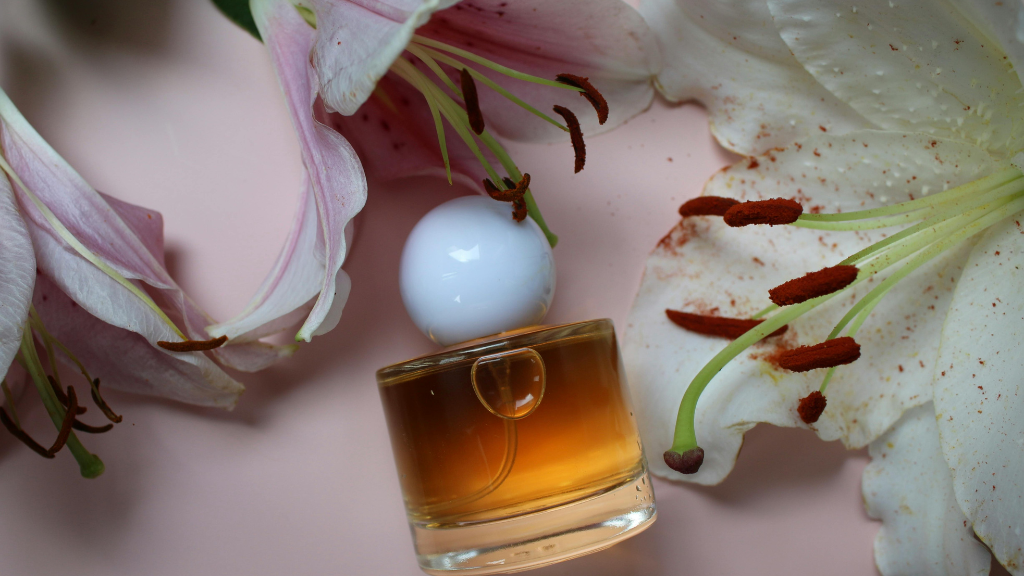
You've smelled a perfume oil you loved and thought, "I could sell this." You're probably right. The real question is whether the numbers still work once you add up bottles, labels, and your time.
This guide is for anyone selling at fairs and pop-ups, running a spa or salon, or building an online shop from home. We'll walk through how to pick what to sell, find a wholesale supplier, work out your margin, stay compliant, and make your first sale.
Africa Imports has supplied small businesses across the U.S. for over 25 years. Everything here comes from what we've seen work, and what we've seen go wrong.
What is a Perfume Oil Business?
A perfume oil business sells fragrance in an oil base instead of alcohol. You start with a concentrated fragrance oil, dilute it into a carrier oil, and sell it as a roll-on, a body oil, or a spray.
Four terms trip people up, so here's the short version:
- Fragrance oil: A concentrated scent, usually a blend of aroma compounds. It's the raw material you buy wholesale.
- Perfume oil: The finished product. It's fragrance oil at a skin-safe strength, ready to wear.
- Essential oil: A plant extract made by distilling or pressing. It's strong, often costly, and many need careful dilution before they touch skin.
- Carrier oil: A mild plant oil, like jojoba or sweet almond. It dilutes the fragrance so it can go on skin safely.
There are three ways into this business. Pick one now, because it shapes every decision after it:
- Resell finished oils under your own label. This is the lowest cost and fastest way to launch. You buy oils that are ready to wear, rebottle them, and build your brand around selection and service.
- Blend your own signature scents. You buy fragrance oils, essential oils and carriers and create blends no one else has. It takes more testing and more learning.
- Do a mix of both. Sell a core range you resell, plus two or three blends of your own that give customers a reason to pick you.
Here's the honest advice sellers with years in this business will give you: most people don't need to become a perfumer. Buying finished scents and building a brand around what you choose, how you package it, and how you treat customers is the faster path to money coming in.
Perfume oil versus alcohol-based perfume
Oil-based perfume is a good fit for small businesses. It costs less to start, since you don't need perfumer's alcohol, which is flammable and comes with extra rules on buying and storage. Oils also sit close to the skin and tend to wear longer than a spray that evaporates. Many customers like that a little goes a long way. The tradeoff is less projection, so an oil feels more personal than a scent that fills a room.
Step 1: Choose What You're Going to Sell
Pick a narrow range and go deep. Don't try to stock everything.
For a new business, 10 to 12 core scents is a workable range. It gives customers real choice without tying up your cash. Sellers who start with 100 scents often end up with shelves of stock that doesn't move, and that's money they can't use to reorder what does.
Most ranges that sell well fall into one of three lanes:
- Designer-inspired impressions: For customers who want a scent they recognize at a lower price. Our designer-inspired perfume oils are a good place to see what's available.
- Traditional and heritage scents: Oils like Egyptian musk, for customers who buy on identity and familiarity. These customers often come back for the same scent again and again.
- Mood or seasonal blends: For customers buying a story, like a fall collection or a blend made for date night.
The sellers who do best often start with what their own community already buys, not with a generic top 10 list. If your church friends, salon clients, or market regulars keep asking about a certain scent, that's your first clue.
For example, if you want to sell personal fragrances, check if the oils are suitable for long-lasting wear and pleasing scents. Wear time is one of the biggest differences between perfume and essential oils, so test both before you order in bulk.
Then check your instincts against real sales. Our best-selling perfume oils make a good starting shortlist, because they show what small businesses reorder most.
One rule to follow every time: describe designer scents as "inspired by" or "an impression of" the original. Never call them a dupe, never say "same as," and never use a brand name on its own as a product name. It protects your business, and it's the honest way to describe what you sell.
Step 2: Find a Wholesale Perfume Oil Supplier
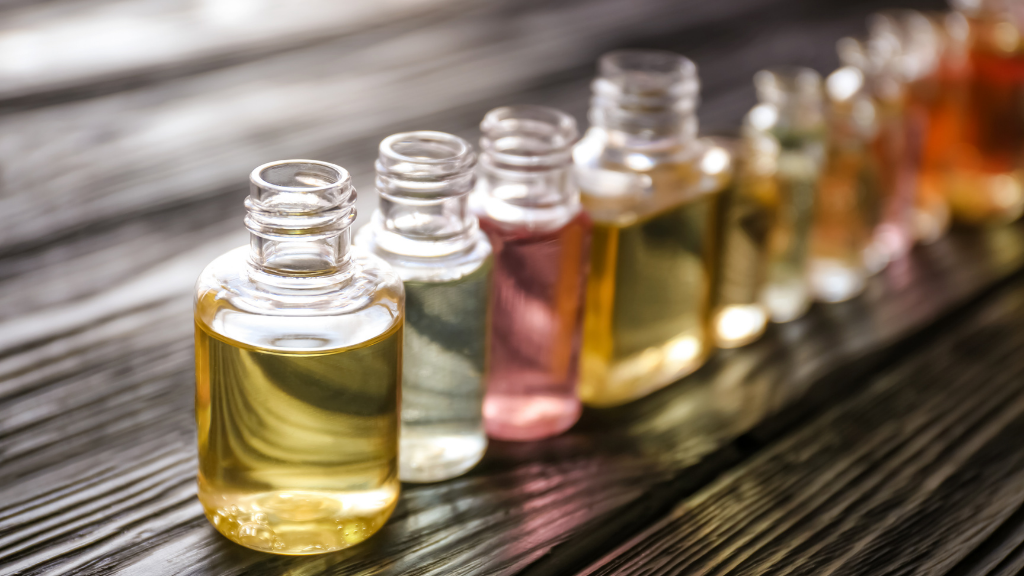
Your supplier is the decision that's hardest to undo. On a first purchase, customers buy the scent, not your brand. If you switch suppliers later and their favorite smells different, you can lose them for good.
Most guides give you a list of ten things to check. In practice, five of them separate a good supplier from a risky one.
Ask for samples before you commit
Never place a bulk order based on a product description. Order small sizes first and test each oil for three things: how strong the scent is, how long it lasts on skin, and whether it causes redness or itching in a patch test.
Use this benchmark. A well-made perfume oil should still be noticeable six to eight hours after you put it on. If it's gone in half an hour, that tells you what you need to know.
Check the paperwork, not the label
A reliable supplier should be able to send you a Safety Data Sheet (SDS) and an IFRA certificate for the oils you buy, any time you ask.
The IFRA certificate is the one new sellers skip most, and it's the most useful. It tells you the maximum safe percentage of that oil for each type of product. Perfume falls under IFRA Category 4, so that's the number to check before you set your blend strength.
This next point saves people money. Marketing words on a listing, like "top grade" or "pure," don't follow any standard. Anyone can write them. The usage rate a supplier recommends tells you far more about what you're getting.
Ask what's been added to the oil
Some perfume oils are sold uncut. Others have already been diluted with a solvent or cutting oil, such as DPG (dipropylene glycol). Cutting isn't wrong in itself, and plenty of sellers cut oils on purpose to hit a price point. But you need to know which one you're buying.
If an oil has already been diluted, you'll need more of it per bottle. That means a cheaper oil can end up costing you more per finished unit. Ask the supplier directly: "Is this oil cut, and at what ratio?" If you get a vague answer, treat that as your answer.
Check they can grow with you
Look at minimum and maximum order sizes. You want a supplier who'll sell you a small bottle to test today and a much bigger order 18 months from now, without switching you to a different product.
Ask how fast they restock and whether stock is held in the U.S. That matters most when a scent sells out in the middle of your busy season and you need it next week, not next month.
Check how long they've been doing it
Read reviews, check how long the business has been running, and pay attention to how they handle problems. A supplier who responds quickly and fixes mistakes is worth more than one who's a few cents cheaper per ounce.
Africa Imports has supplied small businesses for over 25 years. Most of our oils come with the documentation you need, including Safety Data Sheets; we take safety seriously.
Everything is held in stock in the U.S., and orders placed before 2 p.m. Eastern ship the same day, Monday through Friday.
Other checks, like comparing prices and looking at where a supplier is based, still matter. They're just easier to judge once a supplier has passed the five checks above. Price only means something when you're comparing oils of the same strength, and location mostly affects shipping time, which you'll learn from your first order.
Step 3: Work Out Your Margin Before You Buy Anything
Plenty of people sell steadily and still end up with barely enough to reorder. The reason is almost always the same: they never worked out their margin before they bought their stock.
Start by adding up your true cost per finished bottle. Use this list:
- Fragrance oil cost per bottle at your fill size
- Carrier oil cost per bottle
- Bottle, cap or roller ball, and label
- Outer packaging, if you use it
- Your time to fill and label, costed at an hourly rate, even a low one
- Shipping to you, spread across every bottle in the order
- Payment processing and marketplace fees when you sell
Once you have that number, multiply it by four to six to set your retail price. That range leaves room for discounts, breakage, and the scents that sell slower than you'd hoped.
Watch out for one trap. A 4x markup on an incomplete cost isn't really a 4x markup. Labels, caps, and your own time are what people leave out most often, and those small costs add up fast across a few hundred bottles.
Buying in bulk without over-buying
Buying in bulk lowers your cost per unit. That's the whole point of buying wholesale, and it's where your margin comes from.
Still, start smaller than feels right. Stock that doesn't move is cash you can't use. You'll learn what sells faster by selling than by guessing, so save your bigger orders for the scents that prove themselves.
Step 4: Get Your Supplies and Blend Your First Batch
Before you blend anything, gather your supplies:
- Bottles (roll-on, glass, or spray)
- Roller balls or orifice reducers
- Pipettes for measuring
- Small funnels
- Labels
- A carrier oil
If you're diluting a concentrated fragrance oil, a common working range for a perfume oil worn on skin is about 15 to 20 percent fragrance oil to 80 to 85 percent carrier. Always check the IFRA certificate for the specific oil before you settle on a percentage. Some oils have a lower limit, and the certificate always wins.
Some oils are sold ready to wear, and you can rebottle those as they are. Check the product listing so you know which kind you have before you start mixing.
Choose your carrier oil based on the feel you want:
- Jojoba: Light and slow to go rancid, so your finished bottles keep longer on the shelf.
- Sweet almond: A richer, softer finish on skin. It comes from a tree nut, so list it clearly on your label for customers with nut allergies.
- Grapeseed: Very light and absorbs fast, but it has a shorter shelf life. It works best for small batches that sell quickly.
Once you've mixed a blend, let it rest for at least 48 hours before you judge it. Blends heavy in base notes, like musks and woods, often need longer to settle.
Record every batch. Write down the scent, the ratio, the carrier, the date, and what you thought of it at one hour and at six hours. That's how you repeat a winner, and it's how you answer a customer complaint six months later.
Top, middle, and base notes
Every scent has three layers. Top notes are what you smell first, and they fade quickly. Middle notes are the body of the scent. Base notes are what's still there at the end of the day.
This matters to your business for one reason. Cheap oils often skimp on base notes, because base notes cost more. That's why some oils smell strong in the bottle and disappear on the customer an hour later.
You can test this yourself with a paper blotter strip. Dip it, then smell it at one minute, 30 minutes, and two hours. If almost nothing is left at two hours, the base is thin.
Labels that survive the oil
Paper labels don't hold up. Once oil gets on them, they stain, wrinkle, and peel. Use polyester or a similar waterproof synthetic label stock instead.
Every label should show what the product is, the ingredients, the net amount (for example, 0.33 fl oz / 10 mL), your business name and address, and any warnings, such as "for external use only."
Step 5: Package and Brand It
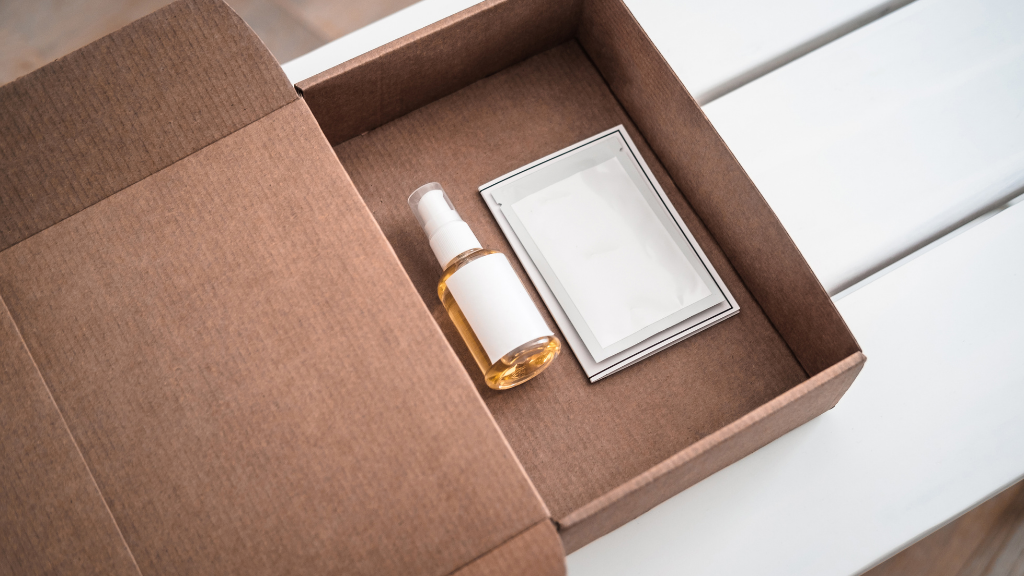
The same oil in a different bottle sells at a different price. That isn't a trick. The bottle, label, and feel of the package are part of what your customer is paying for.
Pick your bottle based on the product:
- Glass for concentrated and uncut oils, because strong fragrance compounds can break down many plastics over time.
- Amber or cobalt glass for anything a customer keeps on an open shelf for months, because UV light speeds up breakdown.
- Clear glass for fast-moving lines, samples, and roll-ons, as long as your own backstock stays in the dark.
- Plastic for diluted body oils and sprays. Here it's the right choice, not a compromise.
One detail trips up a lot of new sellers. Rubber dropper bulbs turn gummy after contact with concentrated oil. Orifice reducers and roller balls don't have that problem.
You'll find oil bottling and supplies like roll-ons, glass bottles, and display stands on our website.
Keep your brand consistent across your bottles, website, and social media. Use the same name, colors, and fonts everywhere. Customers should be able to spot your product on a crowded table.
Step 6: Sell Your First Bottles
Making the product is the easy half. Selling it takes more work, so pick a channel that fits the time and money you have:
- In person at fairs, markets, and pop-ups. This is the cheapest way to test and the fastest way to get feedback. People can smell the product, which is the biggest advantage perfume oils have.
- An online store. A hosted store platform keeps setup simple. You'll need clear product photos, scent descriptions that do the job smelling can't, and a shipping setup built for liquids, with leak-proof caps and padding.
- Wholesale to salons, spas, boutiques, and barbershops. This is the route to becoming a distributor for other businesses, and it depends on consistency more than anything else. If a scent changes between orders, you'll lose the account.
Take your time on scent descriptions, because online, the description replaces the smell. Skip vague adjectives and give customers three things: the notes (for example, vanilla, amber, and sandalwood), the occasion (everyday, evening, or gifting), and who it suits. That helps a customer picture the scent before they buy, and it cuts down on returns.
No space to store stock? Dropshipping with Africa Imports lets you sell without holding inventory. We ship to your customer, with your business name on the paperwork.
Legal and Safety Requirements You Can't Skip
Perfume oil is a cosmetic that goes on skin, and that comes with responsibilities. Use this checklist to keep yourself right:
- Business registration and structure. Most small sellers start as a sole proprietor or an LLC. Our perfume business setup guide [https://africaimports.com/blog/perfume-business-setup/] covers the details.
- Labeling. Product name, ingredients, net quantity, business name and address, and warnings, as covered in Step 4.
- Allergen disclosure. Some common fragrance ingredients can cause skin reactions. Ask your supplier for an allergen report and keep it on file. The FDA is working on rules that will require certain fragrance allergens to be listed on cosmetic labels, so keep an eye out for updates.
- Safety Data Sheets. Keep a copy from your supplier for every oil you use.
- Batch records. Your notes from Step 4 let you trace any complaint back to a specific mix.
- Serious reaction reporting. Under the Modernization of Cosmetics Regulation Act (MoCRA), businesses must report serious adverse reactions to the FDA. Very small businesses are exempt from some MoCRA rules, like facility registration, but not from this one.
- Product liability insurance. Get a quote early. Some markets and retailers ask for proof of coverage before they'll let you sell.
What to Expect in Your First Year
Most small businesses take six to 12 months to find what sells and build a base of repeat customers. That's normal, and it doesn't mean you're doing anything wrong.
How much you need to start depends on your scope. A small roll-on range with simple packaging can get going for a few hundred dollars. A full line with custom packaging and branding can run into the thousands.
The path usually looks like this: friends and family first, then a market stall or pop-up, then repeat customers, then a first small wholesale account. Almost nobody starts at the last step.
Plan to put early profit back into the business. More stock and better packaging in year one set you up to grow in year two.
Common Mistakes That Cost New Sellers Money
- Buying 40 scents before selling a single bottle. Start with 10 to 12 and let sales tell you what to add.
- Pricing off the oil cost alone. Caps, labels, and your time are real costs, and leaving them out wipes out your margin.
- Skipping samples. Ordering in bulk based on a product description is how people end up with a pound of oil they can't sell.
- Storing stock in heat or direct light. It breaks down the oil before it ever reaches a customer.
- Using paper labels. The first drip of oil ruins them, and a stained label makes a good product look cheap.
- Changing suppliers in the middle of a range. When a customer's favorite scent comes back different, they notice.
Frequently Asked Questions
How much does perfume oil cost?
Perfume oil prices depend on fill size, the scent, and how much you buy, and wholesale costs far less per ounce than retail. A small bottle bought at retail carries a much higher cost per ounce than the same oil bought in bulk. For resellers, buying by the pound instead of by the ounce is where the margin comes from.
How much money do I need to start a perfume business?
You can start a small perfume oil business for a few hundred dollars if you keep your range tight. That covers a starter set of oils, carrier oil, bottles, labels, and a small buffer for the batch that doesn't work out. Custom packaging and a bigger range will push that number higher. Most sellers start small and reinvest their profits to grow.
How can I start selling perfume from home?
Most people in this business start at home, and you can too. You'll need a clean workspace used only for your products, storage away from heat and sunlight, accurate labels, and a check of your city or county rules on home-based businesses. If you don't have room to hold stock, dropshipping lets you sell without keeping inventory.
Do I need a license to sell perfume oils?
There's no special federal license to sell perfume oils in the U.S., but you do need the usual business basics. That means registering your business, getting a sales tax permit in states that charge sales tax, and following cosmetic labeling rules, which apply no matter how small you are. Requirements vary, so check with your state and local government.
What is the difference between fragrance oil and perfume oil?
Fragrance oil is the concentrated scent, and perfume oil is the finished product made to wear on skin. In practice, many sellers use the two terms for the same thing, so always check whether an oil is sold ready to wear or needs diluting first.
How long does perfume oil last on the skin?
A well-made perfume oil should last around six to eight hours on skin. Base notes are what drive that. Oils rich in musk, amber, vanilla, and woods tend to last longest, while citrus-heavy scents fade faster. Skin type and climate play a part too, so wear-test each oil before you make any promises to customers.
Can I sell perfume oils I didn't make myself?
Yes. Buying finished oils and selling them under your own brand is how most small fragrance businesses start, and it's called private labeling. Even when you don't blend the oil, you're still responsible for accurate labels, honest descriptions, keeping supplier documents on file, and handling customer complaints.
A Small Business Tip: Start With a Tester Set, Not a Full Range
The fastest way to learn what your customers will buy is to put scents in front of them. Pick a small set across three or four scent families, like musk, floral, fresh, and sweet. Fill tester bottles and take them to a market, or hand them to your regular customers. Then watch what people reach for, not what they say they like. Two weekends of this will teach you more than a month of reading. Put your money into the three or four that moved.
When you reorder, buy by the pound and fill into 1/3 oz roll-ons. That's where the margin sits. Work out your fills per pound before you order. If you're diluting at 20 percent, each 10 mL roll-on uses about 2 mL of fragrance oil, so one pound can fill 200 or more bottles, depending on the oil. An oil set or starter kit and a pack of roll-on bottles is an easy way to begin.
Health and Safety Disclaimer
These statements have not been evaluated by the FDA. Africa Imports products are not intended to diagnose, treat, cure, or prevent any disease. Always perform a patch test before using a new oil on skin, stay within the usage rates on each oil's IFRA certificate, and follow safety guidelines when creating products for resale.
Start Your Perfume Oil Business With Africa Imports
When you buy from Africa Imports, over half of our profits go to charitable work in Africa, funding schools, medical care, and skills training. Your first order is part of that.
Everything you need to get started is in one place: wholesale perfume oils, carrier oils, bottling supplies, and starter kits, all held in stock in the U.S. Orders placed before 2 p.m. Eastern ship the same day. Low minimums mean your first order doesn't have to be a big one, and dropshipping is there if you don't have storage space. We've been helping small businesses grow for over 25 years.