 USD
USD  GBP
GBP  CAD
CAD  AUD
AUD 
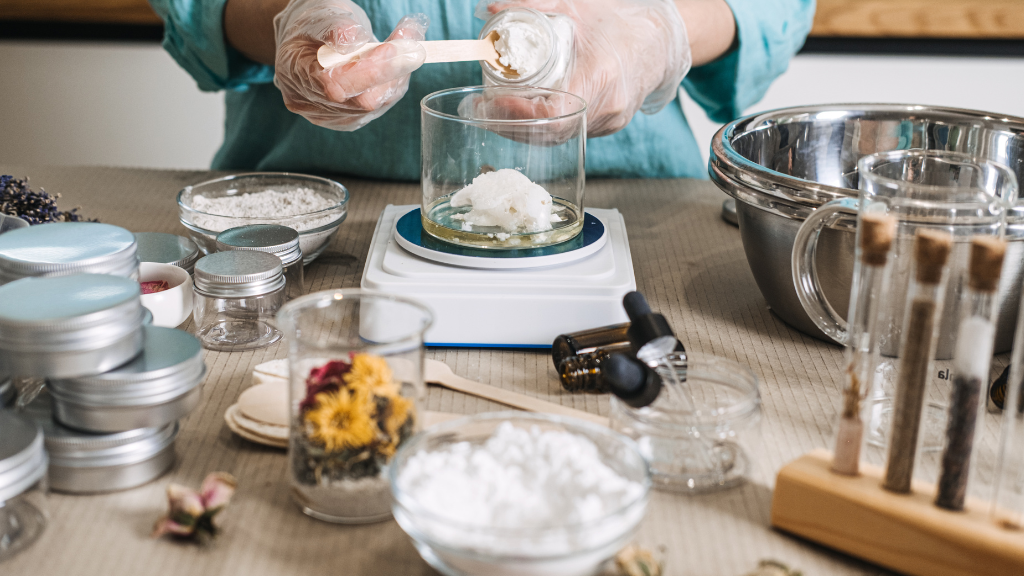
You followed a recipe. The batch came out well. Your customers loved it. Then you made it again and something was off. The scent was weaker. The texture felt different. The color sat a little lighter.
That gap is the difference between a recipe and a formulation. A recipe is a set of instructions measured by volume, like cups, spoons, and drops, so results shift from batch to batch. A formulation is a weight-based blueprint where every ingredient is written as a percentage of the total, and all the percentages add up to 100%. That is what lets you make the same product at any batch size.
If you sell what you make, this one change matters more than almost anything else you do in your workspace.
What Is the Difference Between a Recipe and a Formulation?
A recipe tells you how to make one batch. A formulation tells you what your product actually is, so you can make it at any size and get the same result every time.
What is a recipe?
A recipe measures ingredients by volume. Cups, teaspoons, tablespoons, and drops.
Recipes are easy to follow and they work well when you are learning, testing an idea, or making something for yourself. They also have real limits:
They do not account for ingredient density, so a cup of one oil and a cup of another do not weigh the same They are hard to scale accurately, because doubling volume measures introduces small errors that stack up Results drift between batches, since packing, temperature, and pour speed all change how much you actually get
Recipes are fine for gifts, personal use, and small test batches. They start causing problems the moment money changes hands.
What is a formulation?
A formulation measures ingredients by weight. Grams, ounces, kilograms, or pounds.
Every ingredient is written as a percentage of the total batch weight, and those percentages always add up to 100%. That gives you:
Repeatable results, batch after batch Easier quality control, because you can spot a mistake before you mix Scaling to any size, from 10 units to 1,000 A simple way to check your product against safe usage limits
One point worth clearing up: in everyday use, "formula" and "formulation" mean the same thing. The formula is your recipe written in percentages. Formulating is the act of building and adjusting it.
Why Recipes Cause Problems as Your Business Grows
The core issue is consistency.
A customer who loved your body butter last month expects the exact same thing when she reorders. If it smells lighter or feels greasier, she notices. She may not complain. She may just stop buying.
Here is where recipes let you down. "One cup of coconut oil" can weigh a different amount depending on the temperature of the room and how firmly you packed it. On a warm day it pours. On a cool day you are scooping. Same measuring cup, different amount of oil in the pot.
That is fine when you are making a jar for yourself. It is a problem when your name is on the label.
If you buy oils and butters in bulk to repackage and sell, every batch has to match the one before it. A recipe cannot promise that. A formula can. And consistency is what turns a first-time buyer into a repeat customer.
What You Need to Start Formulating
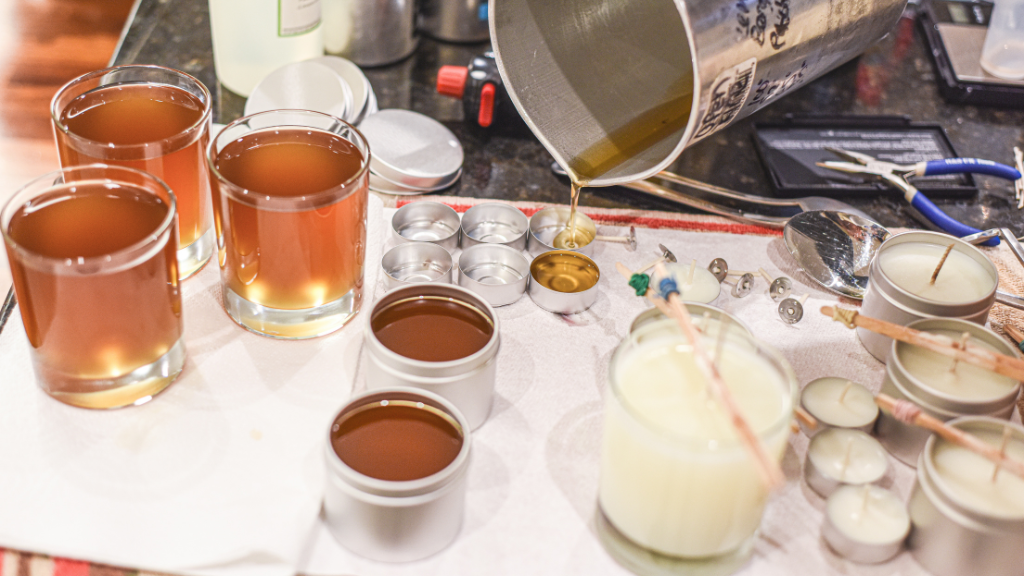
You do not need a lab. Most makers already own most of what they need.
A digital scale that reads in grams, ideally to 0.1g for small amounts like fragrance oil A calculator, or a free formulation calculator or spreadsheet A notebook or spreadsheet to record every batch you make
That is it. The scale is the one item worth spending a little on, because everything else in this article depends on accurate weights.
How to Convert a Recipe Into a Formula (Step by Step)
You can turn almost any recipe you already use into a formula in about ten minutes.
- Weigh each ingredient separately as you make the batch. Write down every weight.
- Use one unit throughout. All grams or all ounces. Never mix the two in the same batch.
- Add all the weights together to get your total batch weight.
- Divide each ingredient weight by the total batch weight.
- Move the decimal two places to the right to get the percentage. For example, 0.30 becomes 30%.
- Check that all your percentages add up to 100%. Round where you need to, then adjust the largest ingredient slightly so the total lands on 100.
That is your formula. Save it somewhere you will not lose it.
Worked example: turning a bath bomb recipe into a formula
Say you weighed out a bath bomb batch and recorded this:
- Baking soda: 400g
- Citric acid: 200g
- Arrowroot powder: 50g
- Sweet almond oil: 30g
- Fragrance oil: 10g
- Witch hazel: 10g
Add them up: 400 + 200 + 50 + 30 + 10 + 10 = 700g total batch weight.
Now divide each one by 700 and convert to a percentage:
Ingredient | Weight | Percentage| Baking soda | 400g | 57.14% Citric acid | 200g | 28.57% Arrowroot powder | 50g | 7.14% Sweet almond oil | 30g | 4.29% Fragrance oil | 10g | 1.43% Witch hazel | 10g | 1.43% Total | 700g | 100%
Those six numbers are now your product. Not "one batch of bath bombs," but the actual make-up of the thing you sell. The carrier oil in this example is the kind of ingredient you would buy in bulk from a range of wholesale carrier oils and use across several products, which is another reason to know your exact percentage.
How to Scale a Formula Up or Down
This is the part a recipe can never match.
Once you have percentages, pick any batch size you want and multiply each percentage by that number. The math does the rest.
Want a 2,100g batch of the bath bombs above? Multiply each percentage by 2,100:
- Baking soda: 1,200g
- Citric acid: 600g
- Arrowroot powder: 150g
- Sweet almond oil: 90g
- Fragrance oil: 30g
- Witch hazel: 30g
Total: 2,100g, and the product is identical to the 700g version.
The same works in ounces. If you want a 40 oz batch, multiply each percentage by 40. Baking soda at 57.14% gives you 22.86 oz. No guessing, no "about double it."
This is how you go from selling 5 units at a craft fair to filling a 200-unit wholesale order without changing your product. Same formula, bigger number.
How Formulas Make Fragrance and Safety Limits Easier
Fragrance oils and cosmetic ingredients have maximum usage rates. Those limits are always written as percentages, which means a formula lets you check your product at a glance.
If your bath bomb formula uses fragrance oil at 1.43%, and the recommended maximum for that use is higher, you can see immediately that you are within range. Try doing that with "12 drops."
IFRA, the International Fragrance Association, publishes maximum usage rates for fragrance materials by product type, based on how the finished product contacts the skin. Reputable suppliers provide this documentation for the oils they sell, and Africa Imports publishes IFRA usage guidance for its fragrance range.
Candle makers already use this thinking without calling it a formula. "Fragrance load" is simply the fragrance oil percentage of your total wax weight, usually around 6% to 10% for soy wax. Soap makers work in the same way, generally around 0.5% to 3% depending on the scent strength you want. If you are stocking candle fragrance oils, the load percentage is the first number to check on any new scent.
Common Mistakes New Formulators Make
Mixing units. Grams in one column and ounces in another will break your math every time.
Skipping the 100% check. If your percentages total 99.2% or 101.5%, something is wrong. Find it before you mix.
Ignoring maximum usage limits on restricted ingredients like fragrance oils and preservatives.
Not writing it down. If you cannot reproduce it on paper, you cannot reproduce it in a pot, and you certainly cannot sell it at volume.
Rounding too early. Do your division first, then round at the end.
Small Business Tip: Keep a Formula Log for Every Product
Start a single spreadsheet with one tab per product. For each one, record the formula in percentages, the date you finalized it, the supplier and size of every ingredient you used, and the batch numbers of the oils.
Three things happen when you do this.
You can hand production to someone else without losing the product. You can price accurately, because you know the exact cost of every gram that goes into a unit. And if a customer ever raises an issue with a batch, you can trace it back to the ingredients you used that day.
If you sell under your own label, this log is also the backbone of a private label line. The same formula, scaled and repeated, is what lets you list a product with confidence and reorder ingredients like wholesale perfume oils in the sizes your volume actually needs.
FAQs
What does formulation mean?
Formulation is the process of building a product as a precise, weight-based blueprint. Instead of "a cup of this," each ingredient is written as a percentage of the total batch, and all the percentages add up to 100%. That lets you make the exact same product at any size.
Is formulation the same as a formula?
In everyday use, yes. The formula is the finished blueprint written in percentages. Formulating is the act of creating and adjusting it. Most makers and manufacturers use the two words to mean the same thing.
What is the formula or recipe of a product?
A recipe lists ingredients in volume measures like cups and spoons and is written for one fixed amount. A product formula lists the same ingredients by weight as percentages of the total, so it can be scaled up or down and repeated exactly. Manufacturers and product sellers work from formulas for that reason.
Do I need special equipment to start formulating?
No. A digital scale that reads in grams, a calculator or free formulation calculator, and a notebook or spreadsheet are enough to begin. Most makers already have almost everything they need.
Can any recipe be turned into a formula?
Most can. Weigh each ingredient, add the weights to get your batch total, then turn each ingredient into a percentage of that total. Once the percentages add up to 100%, you have a formula you can scale.
Why do formulas have to total 100%?
Because the formula represents the whole product. When every ingredient is a share of 100%, you can multiply those shares by any batch weight and get exact amounts. That is what makes scaling accurate instead of approximate.
How do I scale a formula to a specific batch size?
Multiply each ingredient's percentage by your target batch weight. If an ingredient sits at 25% and you want a 800g batch, that ingredient is 200g. Do this for every line and the totals will match your target size.
Health and Safety Disclaimer
This article is for general educational purposes to help small business owners understand product formulation. It is not medical, legal, or regulatory advice. Fragrance and cosmetic ingredients have maximum safe usage rates, and some are regulated.
Always follow IFRA guidelines and the regulations that apply to your product type and location, and consult a qualified professional where needed. Africa Imports products are for external use only where applicable and should be used according to safe usage rates. Africa Imports cannot guarantee compliance outcomes. Each business is responsible for its own regulatory compliance.
Build Formulas You Can Sell With Confidence
Once you formulate by weight and percentage, the guesswork goes away. Every batch matches the last one. Scaling is a multiplication problem, not a gamble. And your customers get the same product every time they order, which is what brings them back.
The oils and ingredients you formulate with come from a supplier where over half of profits fund schools, medical care, and skills training in Africa. Every wholesale order helps that work continue.
When you are ready to build your first formula, take a look at our range of wholesale fragrance oils and start with a scent you already know sells.