 USD
USD  GBP
GBP  CAD
CAD  AUD
AUD 
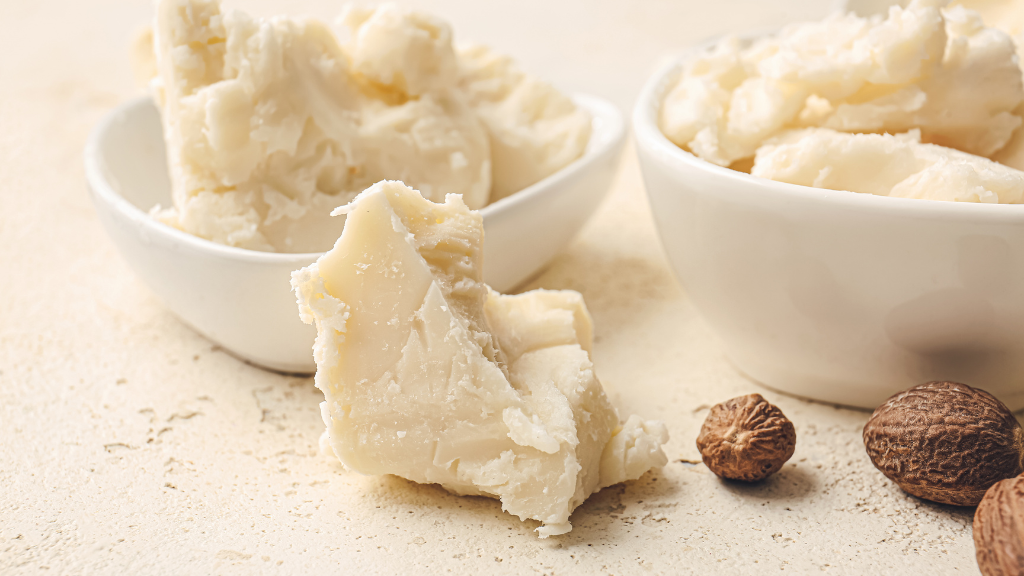
Kokum butter comes from the seeds of the kokum tree, Garcinia indica, which grows in the Western Ghats of India. It is one of the hardest and most stable plant butters you can buy, yet it melts the moment it touches warm skin. That combination is what makes it interesting. It gives you the firmness of a wax with the feel of a light moisturizer.
This guide covers the kokum butter benefits worth knowing about for skin and hair, how it stacks up against shea and cocoa butter, and the exact percentages to use if you are making products to sell.
What Is Kokum Butter?
Kokum butter is pressed from the seeds inside the fruit of the kokum tree. The tree is native to India and grows mainly along the Konkan coast, through Goa and Karnataka. You will sometimes see it sold as Goa butter, and the tree itself is occasionally called the wild mangosteen.
At room temperature it is firm and a little crumbly, closer to a hard bar than a soft scoop. The color runs from off-white to pale gray or pale yellow. It has almost no smell, which is a practical point rather than a small one. If you are adding your own fragrance, kokum will not fight it.
Here is what sets it apart on paper:
- It has a high melting point: roughly 97 to 108 degrees F, depending on grade
- It’s mainly made up of fatty acids: mostly stearic acid at around 49 to 58 percent, and oleic acid at around 34 to 44 percent
- It has an unusual triglyceride structure: up to 80 percent stearic-oleic-stearic, which is unusually uniform
- It has a very comedogenic rating: 0 to 1 on a scale of 0 to 5
- It has a good shelf life: about 1 to 2 years stored properly
There’s one distinction that’s worth mentioning as this sometimes confuses people and can sometimes be listed incorrectly online: Kokum butter is often described as high in omega-3 and omega-6, but this isn’t true.
The omega-6 content, linoleic acid, sits at around 2 percent, and omega-3 is a trace amount at most.
Oleic acid is an omega-9. The butter is mostly stearic and oleic acid, and that is exactly why it is so hard and so stable. If you want a butter high in omega-6, kokum is not the one to reach for.
Refined vs unrefined kokum butter
Unrefined kokum butter keeps more of its color and a faint earthy scent. Refined kokum butter has been processed further to a whiter, smoother, more neutral base.
For most formulating work the refined version is easier to work with, especially if you are building a product where you control the scent yourself. Unrefined suits anyone who wants the ingredient closer to how it comes off the press. The performance difference is smaller here than it is with shea butter, because kokum has so little scent to begin with.
You can see both alongside our other wholesale butters.
Kokum Butter Benefits for Skin

Most of the kokum butter skin benefits people talk about come back to one thing: it is an emollient that absorbs quickly without leaving a film.
Deep moisturizing without the greasy feel
Emollients work by softening skin and filling the gaps between skin cells. Kokum does this well, and it does it without the heaviness you get from cocoa butter or a thick shea.
It melts on contact, sinks in, and leaves skin feeling smooth rather than coated. That makes it a good pick for the spots that take the most punishment: elbows, knees, heels, hands and lips. People who find shea butter too rich often get on better with kokum.
Unlikely to clog pores
Kokum butter rates 0 to 1 on the comedogenic scale, which runs from 0 to 5. For comparison, unrefined shea butter sits at 0 to 2, and cocoa butter is widely rated at 4.
That makes kokum one of the lower-rated plant butters available, and it is the main reason formulators use it in facial products where cocoa butter would be a problem. Everyone's skin responds differently, so a patch test is still worth doing before you use anything new across your face.
Is kokum butter good for your face?
Yes, for most people. Its low comedogenic rating and light feel make it one of the more face-friendly plant butters.
The catch is the texture, and this is the thing that sometimes puts people off from using it directly on their skin. Raw kokum butter is hard and a little uneven, so applying it straight from the block can be awkward.
It works far better blended into a moisturizer or a facial balm where a softer butter or a liquid oil has been added to help it spread. Start with a small amount, use it at night if you are worried about shine, and see how your skin responds over a week or two.
Dry and sensitive skin
Kokum is widely used for dry skin, and plenty of people report that it suits sensitive skin too. It is fair to say that this second point is based more on user experience than on solid research. If you have reactive skin, treat kokum the way you would any new ingredient and test it on a small patch first.
The fragrance-free profile is the practical reason people with fragrance sensitivity reach for it. There is nothing in there to react to on that front, which is not something you can say about most scented butters.
For lips, kokum works especially well. It holds its shape in a tube and softens on contact.
Kokum Butter Benefits for Hair

Kokum butter for hair does the same job it does on skin. It seals moisture into the strand and softens the surface, without the weight that puts people off heavier butters.
That lighter feel matters most for finer hair and for anyone who has tried shea butter and found it too much. Kokum coats without dragging, which is why it turns up in curl creams and defining products where hold and moisture both matter.
On the scalp, it conditions without leaving the buildup that heavier butters can create around the follicle. Better moisture retention also supports elasticity in the hair shaft, and hair that flexes instead of snapping breaks less over time.
Worth being straight about one thing: this is a conditioning and moisture ingredient. It is not a hair growth treatment, and no butter is.
How to use kokum butter for hair
Pre-wash scalp treatment: warm a small amount, massage into the scalp, leave for 20 to 30 minutes, then wash as normal.
Deep conditioner: melt gently and work through damp hair from mid-length to ends. Cover and leave for 30 minutes before rinsing.
Leave-in or curl cream: use at a low percentage in a blended formula rather than applying it neat. See the usage rates below.
On the ends: rub a small amount between your palms until it melts, then smooth over the ends only. Keep it away from the roots.
Browse the full range of hair care products to see what pairs well with it.
Kokum Butter vs Shea, Cocoa and Mango Butter
The question that comes up most often is whether kokum butter is better than shea butter. The honest answer is that they do different jobs.
Kokum is lighter, firmer, close to odorless and lower on the comedogenic scale. Shea butter is softer, richer and better for very dry skin, and it has a long track record that customers already know and trust. If you are making a facial product or a balm that needs to hold its shape in summer, kokum has the edge. If you are making a rich body butter for winter, shea usually wins.
Here is how the four common butters compare:
|
Feature |
Kokum |
Shea |
Cocoa |
Mango |
|
Texture |
Firm, crumbly |
Soft, creamy |
Hard, brittle |
Medium, smooth |
|
Melting point |
97 to 108 F |
89 to 100 F |
93 to 101 F |
86 to 104 F |
|
Scent |
Close to odorless |
Nutty when unrefined |
Strong chocolate |
Very mild |
|
Comedogenic rating |
0 to 1 |
0 to 2 unrefined |
4 |
About 2 |
|
Feel on skin |
Light, absorbs fast |
Rich, can feel heavy |
Heavy, occlusive |
Medium |
|
Best for |
Balms, firm bars, face |
Body butters, hair |
Bars, occlusive balms |
Lotions, all-round |
|
Cost |
Higher |
Lower |
Moderate |
Moderate |
Cocoa butter is the clearest contrast. It is heavier, it smells strongly of chocolate whether you want it to or not, and at a comedogenic rating of 4 it is the one to keep off faces. Mango butter sits in the middle on almost every measure, which makes it a reasonable all-rounder but rarely the standout choice for any single job.
Many formulators end up using two or three of these together rather than picking one. Kokum brings firmness and a light finish, shea brings richness, and a liquid oil brings spreadability.
How to Use Kokum Butter in Your Products
Kokum butter is hard enough that percentage matters more than it does with softer butters. Too much and your lotion turns into a paste. These rates come from ingredient supplier specifications and are a solid starting point.
|
Product type |
Suggested percentage |
Note |
|
Balms and salves |
5 to 100% |
100% sets very hard, blend for spreadability |
|
Body butter |
5 to 25% |
Pair with a softer butter and a liquid oil |
|
Bar soap |
2 to 5% |
Adds firmness to the bar |
|
Cold process soap |
Up to 10% |
5% gives a firm bar |
|
Lotions and creams |
1 to 3% |
More than this thickens the formula too far |
|
Hair conditioners |
1 to 3% |
Same thickening caution applies |
|
Lip balm |
10 to 25% |
Holds shape in warm weather |
A few technique points that save a lot of wasted batches:
- Melt low and slow over a double boiler.
- High heat held for too long damages the butter and is the most common cause of graininess.
- Add kokum during the cool-down phase where your formula allows it.
- Do not try to whip kokum on its own. It is too hard and it will not hold air.
- Whip it with a softer partner butter and a liquid oil.
It blends well with shea, mango, jojoba, sweet almond and apricot kernel oil. Our range of carrier oils covers most of what you will want to pair it with.
For soap making, kokum earns its place by adding hardness to the bar without changing the scent profile you have built.
Storing Kokum Butter
Store kokum butter cool, dark and dry, away from direct sun and away from anywhere the temperature swings. An airtight container matters, and so does keeping water out of it.
Stored properly, kokum butter lasts around 1 to 2 years. Suppliers generally guarantee a minimum of one year in unopened original containers held below 77 degrees F.
If your kokum develops hard, scratchy specks, that is almost always a heat issue rather than a bad batch. Repeated melting and cooling causes the fats to recrystallize unevenly. It is fixable.
Melt the butter gently over a double boiler until fully liquid, then let it cool. The specks will go. This is worth knowing before you throw out a block that is perfectly fine.
Small Business Tip: Building a Product Line Around Kokum Butter
Kokum is a good product to build a line around because it solves a problem your customers already have.
- Start with the repackaging math using this quick formula:
A 1 lb block at $29.90 gives you 16 oz of butter. - Split into 1 oz tins, that is sixteen units at $1.87 of butter cost each.
- Split into 2 oz jars, that is eight units at $3.74 each.
- Add your container, label and time, and you can see your margin before you commit.
- The 1 gallon size at $159.90 is the step up once you are running regular batches.
These are retail figures, so check your wholesale pricing for the real numbers.
On positioning, kokum sells on two things: it is lighter than shea, and it has no scent. That is a genuine gap on most shelves. A lot of customers have tried shea butter, found it too heavy or disliked the smell, and assumed all butters are like that. Kokum gives you something to offer them.
The summer angle is worth planning for. That higher melting point means kokum balms and bars survive shipping and outdoor markets in hot weather far better than shea-heavy formulas. If you sell at fairs from May onward, this is a real advantage rather than a talking point.
On labeling, describe what the product does. It moisturizes, it softens, and it conditions. Do not claim it treats, cures or prevents anything. Making a medical claim turns a cosmetic into an unapproved drug under FDA rules, and that is a problem you do not want.
FAQs
Is kokum butter better than shea butter?
Neither is better overall. They suit different jobs. Kokum is lighter, firmer and less likely to clog pores, which makes it the stronger pick for facial products and for balms that need to hold up in heat. Shea is softer and richer, which makes it better for very dry skin and for body butters. Many formulators use both together.
Is kokum butter good for your face?
For most people, yes. Its comedogenic rating of 0 to 1 means it is unlikely to clog pores. It works best blended into a moisturizer rather than applied straight, because raw kokum is too hard to spread easily. Patch test first.
What is the comedogenic rating of kokum butter?
Kokum butter rates 0 to 1 on the 0 to 5 comedogenic scale. That is one of the lowest ratings among plant butters. Unrefined shea sits at 0 to 2 and cocoa butter at 4.
Does kokum butter have a smell?
Barely. Kokum butter is close to odorless, with at most a faint earthy note in the unrefined version. This is why it is popular with people who are sensitive to fragrance and with formulators who want to control the scent themselves.
Can you use kokum butter on your hair every day?
You can, but a little goes a long way. Used at full strength on the ends, most people find two or three times a week is plenty. In a blended leave-in at 1 to 3 percent, daily use is fine.
Is kokum butter healthy?
Used on skin and hair, kokum butter is a well-tolerated moisturizing ingredient with no common issues reported. It is not a medicine and it does not treat any condition. If you have a diagnosed skin condition, speak to your healthcare provider about the right care plan.
Can you eat kokum butter?
The kokum butter we sell is intended for external use in skin and hair products. Kokum butter is used in food production in some regions, and kokum fruit has a long history in Indian cooking. If you have questions about eating kokum or taking Garcinia supplements, speak to a healthcare provider rather than relying on cosmetic product information.
How long does kokum butter last?
Around 1 to 2 years when stored cool, dark, dry and airtight. Replace it if it develops an off smell.
Why does my kokum butter feel grainy?
Almost always heat. Repeated warming and cooling makes the fats recrystallize unevenly, leaving hard specks. Melt it gently over a double boiler until fully liquid, then let it cool, and the texture will come back.
Health and Safety Disclaimer
The information in this article is for educational purposes only and is not intended as medical advice. Individual results may vary. Always do a patch test before using new skincare products. These statements have not been evaluated by the Food and Drug Administration. This product is not intended to diagnose, treat, cure, or prevent any disease.
Stock Kokum Butter and Support Real Change
Kokum butter is available in 4 oz, 1 lb and 1 gallon sizes, so you can test it before you commit to volume. Browse the full wholesale butters range to see what pairs with it.
Every order you place with Africa Imports helps fund real charitable work. Over half of our profits go toward schools, medical care and skills training in African communities. You get the ingredients to build your business, and your business helps build something else.