 USD
USD  GBP
GBP  CAD
CAD  AUD
AUD 
If you want to make perfumes people will actually buy, you need more than a good nose. You need to understand how fragrances work, what ingredients do, and how to create something consistent enough to sell again and again.
This isn't a hobby guide. This is about building the technical foundation for a real perfume business. Whether you're selling to DIY crafters, boutique owners, or building your own brand, these basics matter. Get them right, and you'll create products customers trust. Skip them, and you'll waste time and money fixing problems that could've been avoided.
Understanding Fragrance Notes: The Foundation of Every Perfume
Fragrance notes aren't just perfume jargon, they're your roadmap for creating scents that work. Every perfume has three layers that appear at different times. Master these, and you control how customers experience your product.
Top Notes: First Impressions That Sell Your Fragrance
Top notes are what people smell first when they spray your perfume. They last 15-30 minutes, then fade away. These are your lightest, brightest scents; the ones that make customers pick up the bottle and want to keep smelling.
Common top note oils include citrus (lemon, bergamot, orange), light herbs (basil, mint), and fresh scents (grapefruit, lavender). They're sharp, clean, and attention-grabbing.
In business terms, top notes are your marketing. They pull customers in. But if that's all your perfume has, people will be disappointed when the scent disappears an hour later. Top notes set expectations, so make sure the rest of your perfume delivers.
Middle Notes: The Heart That Defines Your Signature Scent
Middle notes appear after top notes fade and stick around for 2-4 hours. This is your perfume's personality; what makes it floral, spicy, fruity, or fresh. This is what customers actually remember about your scent.
Popular middle notes include rose, jasmine, geranium, cinnamon, clove, and fruity scents like apple or peach. They're rounder and fuller than top notes, with more body and presence.
This is where your brand identity lives. If you're known for romantic florals or warm spices, it's because of your middle notes. Choose carefully based on who you're selling to and what they want.
Base Notes: Creating Lasting Value and Customer Loyalty
Base notes are the foundation. They last 6+ hours and sometimes linger until the next day. These are your heavy, rich scents that anchor everything else.
Common base notes: sandalwood, cedar, vanilla, patchouli, musk, amber. These are fixatives and they help the whole perfume last longer to keep customers happy with all-day wear.
Base notes drive repeat purchases. When customers say, "I love this perfume, it lasts all day," they're talking about your base notes. Cheap out here, and your perfumes won't have staying power. Invest here, and you'll build customer loyalty.
Balancing Notes for Commercial Success
Here's where most beginners struggle: getting the balance right. Too much top note, and the perfume disappears fast. Too much base, and it's heavy and overwhelming. You need all three working together.
A good starting ratio for perfume formulation:
- Top notes: 20-30% of your blend
- Middle notes: 40-50% of your blend
- Base notes: 20-30% of your blend
These aren't strict rules; they're guidelines. Some perfumes work with different ratios, and once you understand how to write a scalable formula you can adjust those ratios and reproduce them exactly every time. But if you're just starting, stick close to these numbers until you understand how notes interact.
Test your blends over time. Smell them fresh, after an hour, after four hours, at the end of the day. Does the scent flow naturally from one stage to the next? Or does it jump around awkwardly? Smooth transitions mean good balance.
Perfume Concentrations: Choosing the Right Formula for Your Market
Not all perfumes are created equal. Perfume concentration determines how strong your product is, how long it lasts, and how much you can charge for it.
Parfum vs. Eau de Parfum vs. Eau de Toilette: Business Implications
Parfum (Pure Perfume): 20-30% fragrance oil, 70-80% alcohol. The strongest, longest-lasting option. Small bottles, high prices, luxury positioning. Great profit margins, but customers expect premium quality.
Eau de Parfum (EDP): 15-20% fragrance oil. This is the sweet spot for most small businesses. Strong enough to last all day, affordable enough for regular customers. Good balance of performance and price.
Eau de Toilette (EDT): 5-15% fragrance oil. Lighter, more affordable, good for daily wear. Lower profit per bottle, but appeals to customers who want something subtle or budget-friendly.
Your concentration choice affects everything: how much product you need, what you charge, who buys it, and how often they come back.
Matching Concentration to Your Customer Base
DIY customers often want EDT strength - something light they can experiment with or layer. They're price-sensitive and buy frequently in small quantities.
Luxury buyers expect EDP or Parfum. They'll pay more but demand quality, longevity, and packaging that matches the price point.
The daily-wear market wants an EDP that performs without being overpowering. They're your repeat customers who buy the same scent every few months.
Know your customer, pick your concentration, and price accordingly.
Essential Perfume Making Ingredients: What Every Business Needs
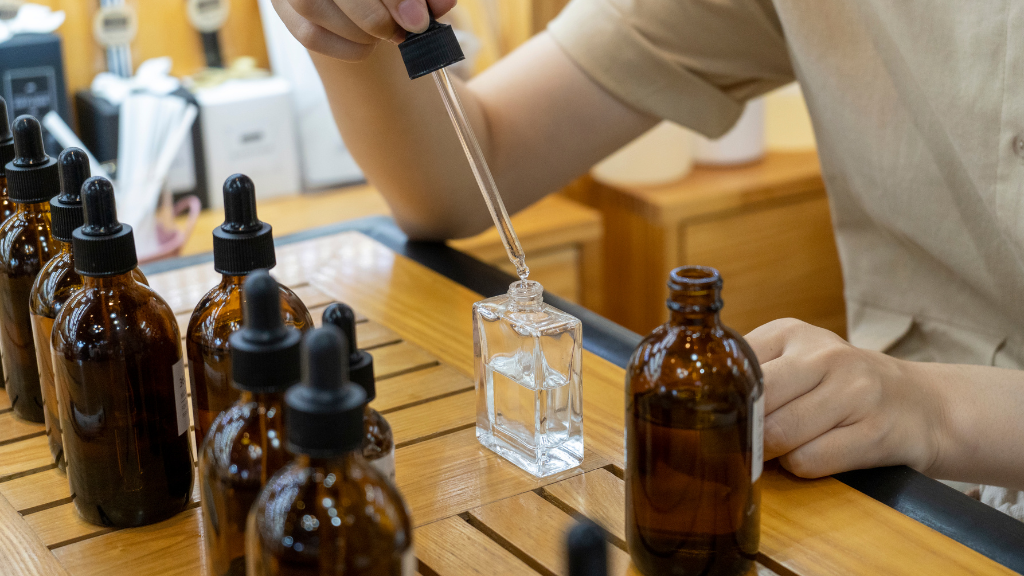
You can't make perfume without the right perfume ingredients. Here's what you actually need.
Fragrance Oils: Your Core Business Investment
Fragrance oils are your main expense and your main product. Quality matters here more than anywhere else, and knowing how to spot high quality fragrance oils before you buy will save you money and wasted batches.
What to look for in fragrance oils:
- IFRA compliance – these oils meet safety standards for skin contact
- Consistency – batch to batch, they smell the same
- Skin-safe formulations – designed for body products, not just candles or soap
- Supplier transparency – they provide safety data sheets and usage guidelines
Don't buy fragrance oils from craft stores meant for candles. They're not made for skin and can cause reactions. Work with suppliers who understand perfume making and can support your business needs.
Alcohol Bases for Perfume: Understanding Your Options
Most perfumes use perfumer's alcohol (ethanol) as the base. It's what makes perfume spray easily and lets the fragrance develop on skin.
Perfumer's alcohol is usually ethanol (95% or higher) with a small amount of water and sometimes a bittering agent. It's expensive—often $30-50 per liter depending on your source and location.
Sourcing challenges: Alcohol regulations vary by state and country. Some require special permits to buy high-proof ethanol. Research your local laws before ordering. Some suppliers can ship perfumer's alcohol, others can't.
Cost considerations: Alcohol is one of your bigger ongoing expenses. Budget for it. As you scale up, look for bulk pricing or wholesale sources.
Carrier Oils and Fixatives: Supporting Your Formulations
Carrier oils are used when making oil-based perfumes (roll-ons). Jojoba oil and fractionated coconut oil are popular because they're light, absorb well, and don't go rancid quickly.
Fixatives help perfumes last longer. Many base note oils (like sandalwood or vanilla) act as natural fixatives. They slow down evaporation and help top and middle notes stick around.
When to use carrier oils: If you're targeting customers with sensitive skin or those who prefer roll-on perfumes over sprays. Oil-based perfumes don't project as much but they last longer on skin and feel more intimate.
Perfume Blending Basics: From Trial and Error to Consistent Results
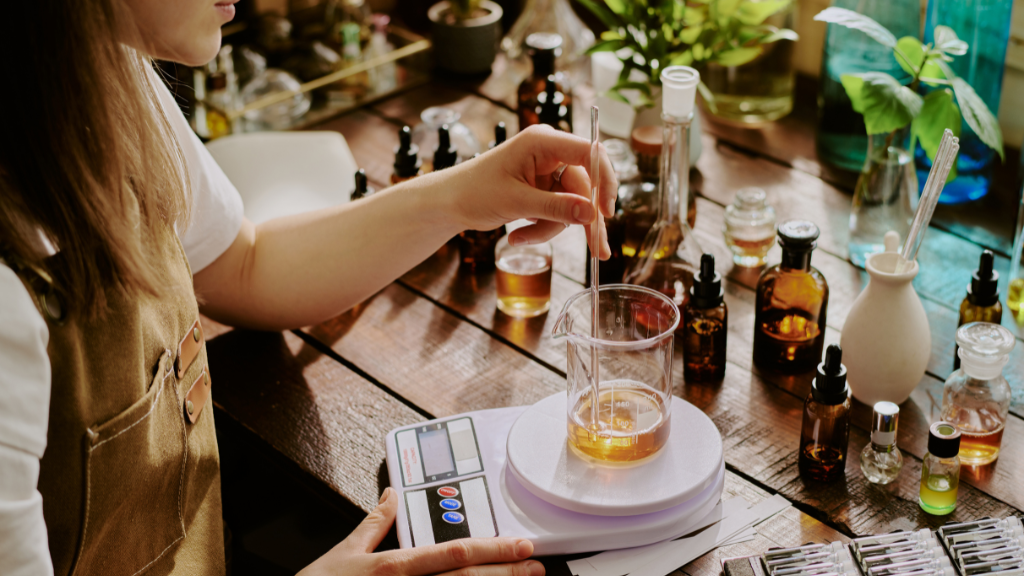
Starting Ratios and Testing Methods
Don't just randomly mix oils and hope for the best. Start with a plan.
Basic blending approach:
- Choose your base notes first (2-3 oils)
- Add middle notes (3-5 oils)
- Finish with top notes (2-3 oils)
Testing in small batches:
- Use 5-10ml test bottles
- Start with 10-20 total drops of fragrance oils
- Document exactly what you use
- Test on skin, not just paper strips
Work in drops or grams so you can scale up later. If you wing it with "a little of this, some of that," you'll never be able to remake your best blends.
Maceration and Ageing: Why Patience Creates Better Products
After you blend your fragrance oils and dilute them in alcohol, don't sell them yet. Let them sit.
Maceration is the ageing process where the alcohol and oils fully blend together. Sharp edges smooth out. Scents that seemed too strong or too weak balance out. The whole perfume develops depth.
How long: Minimum 2 weeks. Better after 4-6 weeks. Some perfumers age their blends for months.
Storage during maceration: Dark bottles, cool place, away from direct sunlight. Shake gently every few days.
This waiting period separates okay perfumes from good ones. Factor it into your production timeline.
Documentation and Recipe Management for Your Business
Write everything down. Every successful blend needs a documented recipe that includes:
- Each oil used and the exact amounts
- Dilution ratio (fragrance to alcohol)
- Maceration time
- Batch date
- Any notes about the process or results
When a customer loves a scent and wants to reorder, you need to be able to remake it exactly. When something goes wrong, you need to know what you did differently. Documentation isn't optional; it's a must when running a business.
Common Beginner Mistakes That Cost Money and Customers
Overspending on Ingredients Before Understanding Your Market
New perfume makers often buy 50 different oils before they've sold anything. Then they realize most of those oils don't work for their target customer or their skill level.
Start lean. Buy 15-20 oils that cover all three note categories. Test them. Learn how they work. See what your customers actually want. Then expand your collection strategically.
Wholesale pricing helps here; you can buy enough to test and produce without emptying your bank account on ingredients you might not use.
Skipping the Testing Phase and Rushing to Market
The biggest mistake? Making a blend, loving how it smells immediately, and listing it for sale that day.
Perfumes change. What smells good fresh might smell terrible after a week. What works on your skin might not work on others. What you think is a winner might fade in an hour for most people.
Test on multiple people. Test over time. Get feedback. Fix problems. Then sell.
Your reputation depends on products that work. One bad experience can cost you a customer forever.
Ignoring Fragrance Oil Quality and Safety Standards
Not all fragrance oils are safe for skin. Some are made for candles or soap and will cause reactions if used in perfume.
If you're buying oils that don't provide safety information or IFRA compliance data, you're taking a risk with your customers' health and your business liability.
Good suppliers provide documentation. They know their products. They can tell you the maximum safe usage rates and which oils have restrictions. Work with them, not against them.
How Africa Imports Supports Your Perfume Making Fundamentals
Comprehensive Fragrance Oil Selection for Every Note Category
We carry oils for every note category you need: bright top notes, rich middle notes, and strong base notes. Whether you're creating fresh citrus scents, warm florals, or deep woody perfumes, we've got you covered.
Our perfume oils are skin-safe and ready for perfume making. We don't sell you candle oils and pretend they'll work for body products. These are formulated for what you're actually making.
Affordable Wholesale Quantities for Testing and Production
Testing costs money. We get it. Our wholesale pricing lets you buy enough to test properly without breaking your budget. Once you know what works, you can scale up without paying retail prices.
We work with perfume makers at every stage, from complete beginners testing their first blends to established brands ordering in bulk. Flexible quantities mean you can grow at your own pace.
Educational Support for Blending Success
Got questions about which oils work together? Not sure about dilution ratios? Need help troubleshooting a blend that's not working? Ask.
We've worked with hundreds of perfume makers. We know what trips people up and how to fix it. Use that knowledge. We're here to help you succeed, not just sell you products.
Connecting the Basics to Your Business Goals
From Personal Blends to Sellable Products
Making perfume for yourself is different from making perfume to sell. Personal blends can be inconsistent, experimental, and totally unique to your preferences. Sellable products need to be consistent, safe, and appealing to your target customer.
The jump from hobby to business means:
- Documented formulas you can reproduce
- Consistent ingredient sourcing
- Proper safety testing
- Customer education about how to use your products
- Professional packaging and labeling
These basics we've covered are what make that jump possible.
Building Your Signature Fragrance Line
Once you understand fragrance notes, concentrations, and blending basics, you can start building a cohesive product line. Not just random scents, but a collection that works together and tells a story about your brand.
Maybe you're known for fresh, clean scents perfect for daily wear. Maybe you specialize in warm, cozy fragrances for cold weather. Maybe you create bold statement perfumes for special occasions.
Your technical knowledge lets you create that identity intentionally instead of accidentally. That's the difference between a hobby and a brand.
Ready to master the basics and start creating perfumes that sell?
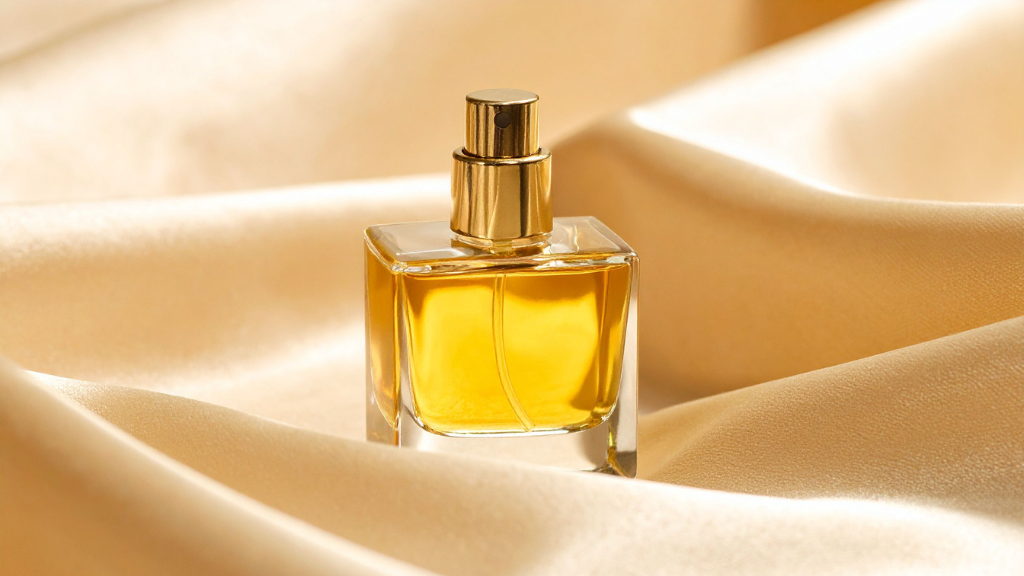
Africa Imports offers quality fragrance oils, expert guidance, and the supplier partnership you need to build your perfume business right. Shop our fragrance oil collection or reach out with questions; we're here to help.
Health and Safety Disclaimer
Always follow IFRA guidelines and perform proper testing. Africa Imports fragrance oils are for external use only and should not be applied directly to skin without proper dilution. Consult safety data sheets before use.
You Might Also Like
6 MIN READ / WELLBEING
How Fragrance Oils Can Improve Wellbeing and Productivity
Explore how scents influence mood and focus to boost your productivity and promote a sense of calm in your daily life.
5 MIN READ / AROMATHERAPY
How Scents Help Achieve Emotional Balance
Learn how different scents can calm your mind, uplift your emotions, and help restore balance through the power of aromatherapy.

4 MIN READ / FRAGRANCE PROFILE
Musk Fragrance Oil Perfume
Dive into the timeless allure of musk fragrance oils—learn their history, uses, and why they remain a classic in perfumery.