 USD
USD  GBP
GBP  CAD
CAD  AUD
AUD 
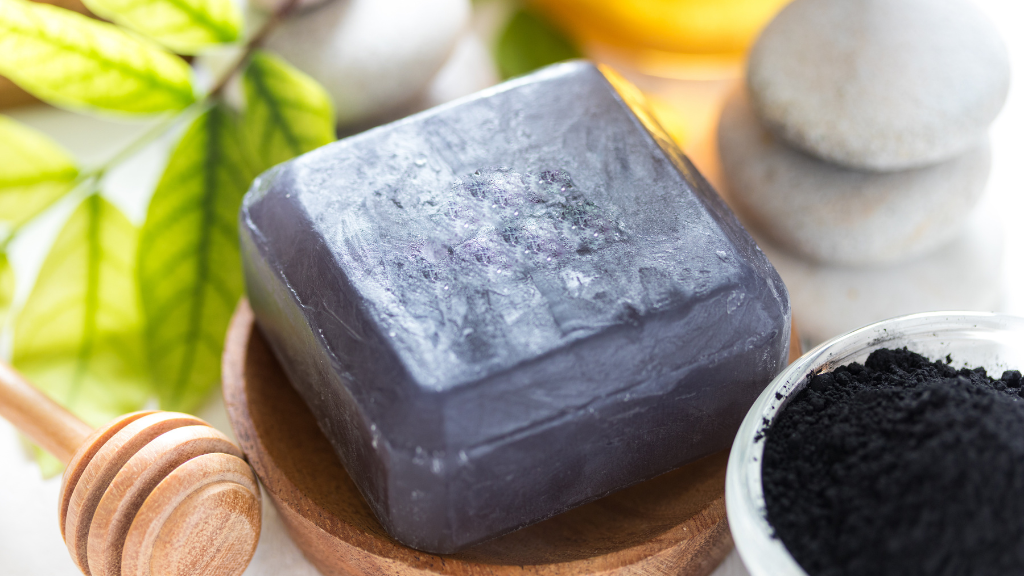
Charcoal soap is a bar cleanser with activated charcoal mixed into a soap base. It soaks up oil sitting on the skin, lifts dirt out of pores as you wash, and gives a light physical scrub from the charcoal particles. That is the honest short version. It works on the surface, and the research behind anything deeper is thin. Here is what the bar does, who it suits, and how to sell it if you are stocking a shelf.
What Charcoal Soap Is Made From
Activated charcoal is not the same thing as the charcoal in your grill. Regular charcoal is burned wood. Activated charcoal has been heated and then treated with steam or gas, which opens up thousands of tiny pores across every particle. That pore structure is the whole point. It is what lets charcoal grab onto oil and dirt.
The surface area involved is hard to picture. One estimate often quoted in the industry puts a single gram of activated charcoal at around 3,000 square meters of surface, roughly three olympic swimming pools. Treat that as an estimate rather than a hard figure, because it varies with the source material and how the charcoal was processed. The takeaway is simple enough: there is a lot of surface packed into a small amount of powder.
Charcoal for cosmetics usually comes from wood, coconut shells, or bamboo. Several of the bars in the Africa Imports range use bamboo charcoal, and you will see it listed on the label as activated bamboo charcoal.
A charcoal bar is not just charcoal. The charcoal is a small part of the recipe, blended into a soap base made from saponified oils. What sits alongside it matters more than most people think. The Sunaroma charcoal bar, for example, pairs charcoal powder with shea butter, Dead Sea mud, bergamot essential oil, vitamin E, green tea leaf extract, and goji berry extract. Other bars on the market add black seed oil, olive oil, aloe vera, or tea tree oil. Two bars can both say charcoal on the front and behave very differently on skin, because the base is doing most of the work.
Where the charcoal comes from
Bamboo is the most common source in this category for a practical reason. It regrows fast, so makers can harvest it without felling hardwood. Coconut shell charcoal is the other common option, made from a byproduct that would otherwise be waste.
What Charcoal Soap Does for Skin
Four things, and each one has a limit worth knowing before you buy a case of it.
Absorbs excess oil
Charcoal is porous, so it picks up sebum sitting on the skin while you lather. People with oily and combination skin notice this most, especially through the forehead, nose, and chin. Skin feels less slick after a wash and looks less shiny for a few hours.
The limit: it removes oil that is already there. It does not change how much oil your skin makes. Sebum production is driven by hormones and genetics, and a bar of soap does not touch either.
Lifts dirt and buildup from pores
Charcoal binds to dirt and oil in the soap lather so it rinses down the drain instead of settling back onto your skin. That is a real cleansing effect and it is the strongest thing charcoal has going for it.
Here is the part almost nobody mentions. Activated charcoal needs sustained contact with a substance to bind it properly, which is why it works as a poison antidote taken internally over hours. A 60 second wash is not hours. The charcoal is on your face for under a minute and then it is gone. Soap is a cleanser, not a treatment, and charcoal soap is no exception.
The research agrees. A 2020 literature review in Clinics in Dermatology by Sanchez, Fayne and Burroway looked at charcoal in cosmetic products and found that while there are no reported negative effects of charcoal on skin, there is very little evidence for its exfoliating or anti-aging abilities either. A 2021 review in the International Journal of Community Medicine and Public Health by Sajjad and colleagues reached the same conclusion, calling for proper trials before charcoal claims for acne and dark spots are taken as settled.
Gives light exfoliation
Fine charcoal particles lift dead cells from the surface as you massage the lather in. This is gentler than a scrub with ground nuts or sugar, and gentler than the ash in a traditional black soap bar.
This is also where the word brighter comes from. Smoother skin reflects light more evenly, so it looks fresher. That is a surface effect from exfoliation. It is not lightening, and no charcoal bar changes your skin tone.
May help with blemish-prone skin
Clearing surface oil and buildup can mean fewer pores getting clogged in the first place, and some people with oily, blemish-prone skin find a charcoal bar helps keep things calmer. Others notice nothing at all.
That is as far as the claim can honestly go. Charcoal soap does not treat acne. Acne involves oil, bacteria, inflammation, and how quickly skin cells shed, and a rinse-off cleanser touches one of those four for less than a minute. If someone has persistent breakouts, they need a dermatologist, not a different soap.
Charcoal Soap vs African Black Soap
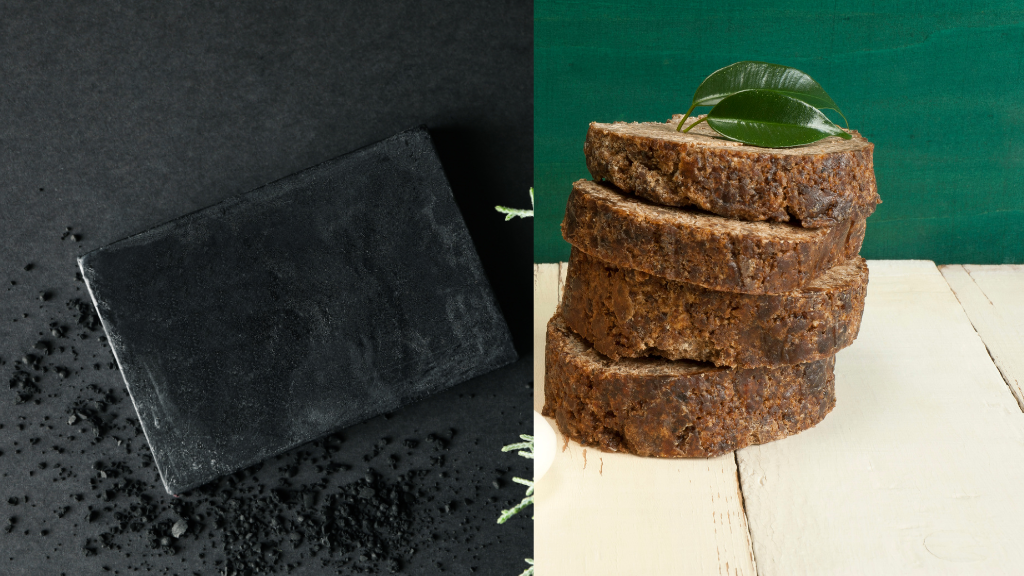
These two get confused constantly, and it is easy to see why. Both are dark bars, both sell in the same aisle, and both get described as good for problem skin. They are not the same product.
What makes it dark
Charcoal soap gets its color from added activated charcoal. African black soap gets its color from ash made by burning plantain skins, cocoa pods, and palm leaves.
Where it is made
Charcoal soap is mostly manufactured in the US and India. African black soap comes from West Africa, mainly Ghana and Nigeria.
Texture:
Charcoal soap is a firm, smooth, evenly molded bar. Black soap is softer, uneven, and often crumbly at the edges.
Scent
Charcoal soap smells like whatever fragrance or essential oil was added. Black soap has its own earthy, faintly smoky smell.
Exfoliation
Charcoal gives fine, light exfoliation. Black soap is coarser because of the ash.
Best starting point
Charcoal suits oily and combination skin. Black soap is the usual first pick for acne-prone skin, uneven tone, and eczema-prone skin.
Storage
Charcoal soap needs a dry, draining dish. Black soap needs airtight storage, ideally under 50% humidity, or it sweats and softens.
One point worth making to a customer who thinks charcoal is the newer, more processed option: cocoa pod charcoal is already part of what makes real African black soap work. Charcoal is not new to this category at all. It has just been isolated and concentrated into a modern bar.
Neither is better. They suit different customers, and plenty of people end up buying both, or adding a turmeric soap bar to sit alongside them.
Which Skin Types Charcoal Soap Suits
Oily skin
The best fit by a distance. Once or twice a day is usually fine.
Combination skin
Good fit. Consider using it on the T-zone only and something milder elsewhere.
Acne-prone skin and body acne
May help with the surface causes. Chest, back, and shoulders are practical use cases that most articles skip, and a full-size body bar makes more sense there than a small face bar.
Dry skin
Go carefully. Look for bars with shea butter or added oils in the base, cut back to two or three washes a week, and always moisturize while skin is still damp.
Sensitive skin
Patch test on your inner arm and wait 24 hours before using it on your face. Worth knowing: the fragrance in a bar is far more likely to cause a reaction than the charcoal itself.
How to Use Charcoal Soap
- Wet skin with warm water.
- Work the bar into a lather in your hands or on a washcloth. Do not scrub the bar directly on your face.
- Massage the lather in small circles for 30 to 60 seconds.
- Rinse well with cool water.
- Moisturize while your skin is still damp.
How often: once or twice a day if your skin is oily. Two or three times a week to start if your skin is dry or reacts easily, then build up if it suits you.
Where to keep it: on a dish that drains. A wet charcoal bar leaves gray marks on tile, grout, and light countertops, and that is the number one complaint people have about it.
What Charcoal Soap Will Not Do
Straight answers, because this is the part most pages skip.
It will not detox your body. Skin is not an exit route for toxins. That job belongs to your liver and kidneys.
It will not shrink your pores. Pore size is genetic. Clearing out buildup can make pores look smaller, and that is a temporary cosmetic effect, not a change to the pore.
It will not lighten your skin tone.
It will not treat a diagnosed skin condition.
It can dry you out if you overdo it. Stripping oily skin often backfires, because skin that feels tight tends to produce more oil, not less.
Anyone can react to a new soap. Patch test first, especially with fragranced bars.
The evidence base is thin. Charcoal soap is a good cleanser that works well for oily skin. It is not a treatment, and any page telling you otherwise is selling you something.
FAQs
What are the benefits of charcoal soap?
It absorbs oil sitting on the skin, lifts dirt and buildup from pores as you wash, and gives light exfoliation from the fine charcoal particles. Some people with blemish-prone skin find it helps keep pores clearer. The effects are surface-level and happen while you wash.
What are the disadvantages of charcoal soap?
It can be drying with heavy use, particularly on dry or sensitive skin. Fragranced bars can irritate reactive skin. Wet bars leave gray marks on light surfaces. And the clinical evidence for charcoal in skin care is limited, so expectations should stay modest.
Is it safe to use charcoal soap every day?
For most people with oily or combination skin, yes. If your skin is dry, sensitive, or feels tight after washing, drop to two or three times a week. Reviews of charcoal in cosmetics have found no reported harm from
Does charcoal soap brighten skin?
Not in the sense of changing your skin tone. Any brighter look comes from exfoliation clearing dull surface cells, so light reflects more evenly. Charcoal has no lightening effect and should never be sold as a skin lightener.
Is charcoal soap good for dry skin?
It can work if you pick the right bar and use it sparingly. Look for shea butter or added oils in the ingredient list, wash two or three times a week rather than daily, and moisturize straight after. A charcoal bar with nothing conditioning in the base will leave dry skin feeling tight.
What is the difference between charcoal soap and African black soap?
Charcoal soap is a firm bar colored with added activated charcoal, mostly made in the US and India, and best suited to oily skin. African black soap is a softer bar colored by ash from plantain skins and cocoa pods, made in West Africa, with coarser exfoliation and a long track record with acne-prone and eczema-prone skin.
How long does a charcoal soap bar last?
An 8 oz bar used once or twice a day for the face typically lasts six to eight weeks. Used as a full body bar it goes faster, closer to three or four weeks. Keeping it on a draining dish between washes makes a noticeable difference, since a bar left sitting in water softens and wastes away.
Where can I buy charcoal soap wholesale?
Africa Imports stocks charcoal soap at wholesale prices with low minimums, so you can test a small run before committing to a case. Browse the charcoal and specialty soap bars currently in stock, and every order helps fund charitable work in Africa.
Health and Safety Disclaimer
Charcoal soap is a cosmetic product intended for external use only. It is not intended to diagnose, treat, cure, or prevent any disease or skin condition. Individual results vary. Patch test on a small area of skin and wait 24 hours before regular use. Avoid contact with eyes. Discontinue use if irritation, redness, or discomfort occurs. If you have a diagnosed skin condition or persistent skin concerns, speak to a dermatologist or healthcare professional before changing your routine.
Small Business Tip: Stocking and Selling Charcoal Soap
Who buys it
Customers who are already asking you about oily skin, blackheads, or "something for my T-zone." The charcoal buyer skews younger than the black soap buyer. Men's grooming is the underserved angle here, because charcoal reads as unisex in a way that most skin care packaging does not. If you sell at fairs or pop-ups, a charcoal bar is one of the few skin care items men will pick up unprompted.
Merchandise it against black soap, not beside it.
Two dark bars sitting side by side confuses people and costs you the sale. Put a small shelf card on each: charcoal for oil control, black soap for acne and uneven tone. Customers who understand the difference often buy both.
Margins and size
The Sunaroma 8 oz charcoal bar retails at $11.38 and is the largest charcoal bar in the Africa Imports catalog. Most competing bars on the market are 3 to 4 oz. A bigger bar makes a higher price easier to justify at the counter and gives you room to bundle. Contact us for current wholesale tier pricing before you build your retail price.
Storage and display
Charcoal bars mark light surfaces when wet, so display on dark trays or keep them wrapped in stacks. Wrap in wax paper or cellophane rather than sealed plastic, since soap needs to breathe. Tell your own customers to use a draining dish at the point of sale. It takes five seconds and saves you a complaint later.
Sampling works here. Cut-bar samples are effective for charcoal because the effect on shine is noticeable after a single wash. This is one of the few skin care products where one trial creates a repeat buyer, so factor a bar or two into your sampling budget.
What to say, and what not to. If a customer asks whether it will cure their acne, the honest answer sells better than the hyped one. "It helps keep pores clear, and a lot of people with oily skin like it" builds trust and sets up a repeat purchase. "It cures acne" gets you a return, a bad review, and real regulatory exposure. Under MoCRA, retailers making treatment claims about cosmetic products carry liability, not just manufacturers. Keep your shelf cards and product descriptions descriptive rather than medical.
Ready to Stock Charcoal Soap for Your Shelves?
Charcoal soap is a steady seller for anyone with customers who deal with oily or blemish-prone skin, and it pairs well with the black soap you are probably already stocking. Africa Imports has been supplying small business owners across the US for over 25 years, with low minimums so you can start small and scale as demand builds.
See what is in stock and get wholesale pricing on charcoal soap bars today. Over half of Africa Imports profits fund schools, medical care, and skills training in Africa, so every order you place puts money behind that work.