 USD
USD  GBP
GBP  CAD
CAD  AUD
AUD 

Starting a soap making business can turn your creative hobby into a steady income stream. Whether you're planning to sell at local farmers markets, craft fairs, or directly to friends and neighbors, setting up your business properly from the start will save you headaches later and help you build customer trust.
Many soap makers jump straight into creating products without thinking about the business side. While your passion for natural ingredients and handcrafted quality is important, having a solid business foundation is what separates successful soap entrepreneurs from weekend hobbyists.
Establishing Your Soap Business Structure
Choosing the Right Business Structure
Most small soap businesses start as sole proprietorships because they're simple and inexpensive to set up. You'll use your Social Security number for taxes and can operate under your own name. However, if you want to protect your personal assets, consider forming an LLC (Limited Liability Company). An LLC costs more upfront but shields your home and savings if someone has an allergic reaction to your products.
Single-member LLCs are popular with soap makers because they offer liability protection while keeping taxes simple. You'll still file taxes like a sole proprietor, but your business debts stay separate from your personal finances.
Registration and Licensing Requirements
Every state has different rules, but most require you to register your business name if it's different from your legal name. Check with your county clerk's office about local business licenses. Some areas require home-based businesses to get special permits.
Don't forget about sales tax. If you're selling soap, you'll likely need to collect and pay sales tax in your state. Register with your state's tax department to get a sales tax permit. This usually costs between $10-50 and lets you buy ingredients without paying sales tax on items you'll resell.
Insurance and Liability Considerations
Product liability insurance is essential for soap makers. Even natural ingredients can cause reactions in sensitive people. General liability insurance typically costs $200-400 per year for small soap businesses and covers you if someone claims your product caused them harm.
Some soap makers also get business property insurance to protect their equipment and inventory. If you're working from home, check if your homeowner's insurance covers business activities. Many don't, leaving you unprotected.
Planning Your Workspace and Inventory
Setting Up Your Workspace
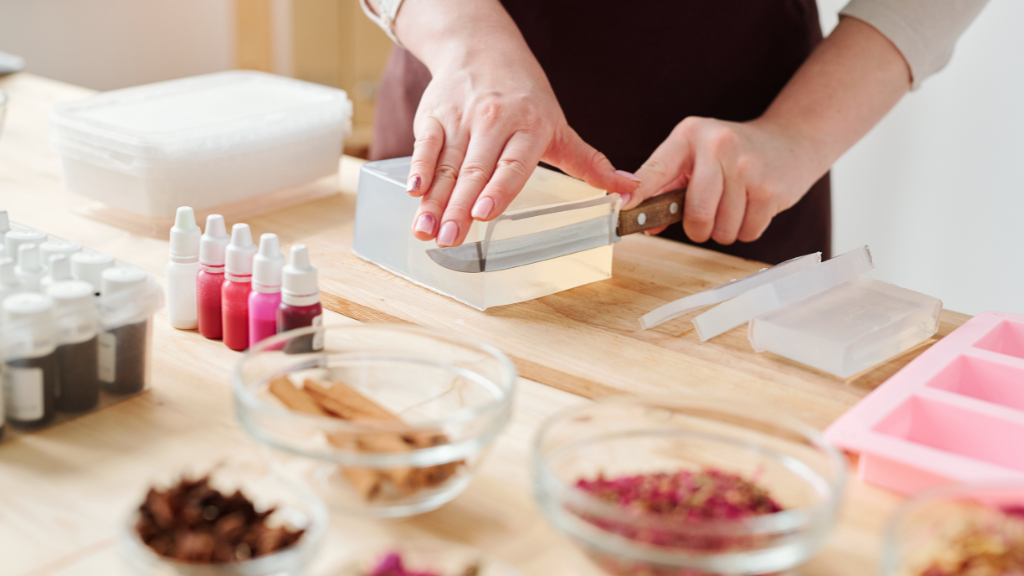
Your workspace needs to be clean, organized, and separate from your regular kitchen. Many health departments require commercial soap makers to use dedicated equipment that never touches food. Even if you're selling at farmers markets, customers expect professional standards.
Good ventilation is crucial when working with lye and fragrance oils. Install an exhaust fan or work near open windows. Keep your workspace organized with clearly labeled storage for different ingredients. This prevents mistakes and shows professionalism if health inspectors visit.
Managing Inventory and Supplies
Start small and track what sells best. Keep detailed records of your ingredient costs so you can price products profitably. Most successful soap makers aim for a 60-70% profit margin to cover their time, overhead, and business expenses.
Store fragrance oils in a cool, dark place and rotate your stock regularly. Check expiration dates on natural ingredients like carrier oils and butters. Old oils can make your soap go rancid, which damages your reputation.
Building Customer Trust and Safety
Creating Safety Information for Customers
Your customers need to know what's in your soap and how to use it safely. Create simple ingredient lists using common names instead of chemical names. For example, write "coconut oil" instead of "sodium cocoate."
Include basic safety information with your products: "For external use only. If irritation occurs, stop using it immediately." Some soap makers include patch test instructions: "Test on a small skin area first."
Developing Standard Operating Procedures
Document your recipes and processes. This helps you make consistent products and proves you follow good manufacturing practices if questions arise. Keep batch records showing when you made each batch, which ingredients you used, and any issues that came up.
Take photos of your workspace and processes. This shows customers you maintain clean, professional standards and can help with insurance claims if needed.
Growing Your Soap Business
Starting Small and Scaling Up
Begin by testing your products with friends and family. Their honest feedback helps you improve before investing in large quantities of ingredients. Start with 3-5 signature scents rather than trying to offer everything.
Focus on one sales channel at first. Master farmers markets before expanding to online sales or retail stores. Each channel has different requirements and learning them all at once can overwhelm new business owners.
Building a successful soap business takes time and attention to detail. Focus on making quality products consistently, treating customers well, and following proper business practices. With patience and dedication, your soap making passion can become a profitable venture.
Health and Safety Disclaimer
The information provided in this article is for educational purposes only and should not be considered as professional business or legal advice. Soap making involves working with potentially hazardous materials including sodium hydroxide (lye). Always follow proper safety protocols, wear appropriate protective equipment, and ensure adequate ventilation when making soap.
Before starting any soap business, consult with local authorities about licensing requirements, health regulations, and zoning restrictions in your area. Consider consulting with a business attorney and accountant to ensure compliance with all applicable laws and regulations.
Individual results may vary, and we make no guarantees about the success of any business venture. Always test products thoroughly and maintain appropriate insurance coverage for your business activities.
You Might Also Like:
7 MIN READ / WELLBEING
How Fragrance Oils Can Improve Wellbeing and Productivity
Explore how different scents can influence focus, relaxation, and mood — helping you create an environment that supports wellness and productivity.

6 MIN READ / SOAP MAKING
The Best Fragrance Oils for Soap Making
Discover the top fragrance oils that perform beautifully in soap — offering long-lasting scent, rich lather, and excellent stability.
5 MIN READ / PRODUCT QUALITY
What to Look for in High-Quality Oils
Learn how to identify premium oils by checking purity, sourcing, and performance — ensuring your products meet top standards.