 USD
USD  GBP
GBP  CAD
CAD  AUD
AUD 

Raw shea butter is one of the most useful ingredients you can keep in your skincare routine or product-making toolkit. But knowing how to use it properly makes all the difference between a greasy mess and a nourishing treatment that actually works.
Whether you want to apply unrefined shea butter straight from the container or turn it into whipped body butters, lotions, and scrubs, this guide walks you through everything. You'll learn the right techniques for melting, scenting, and testing shea butter so you get the best results every time.
Simple Ways to Use Raw Shea Butter on Skin and Hair
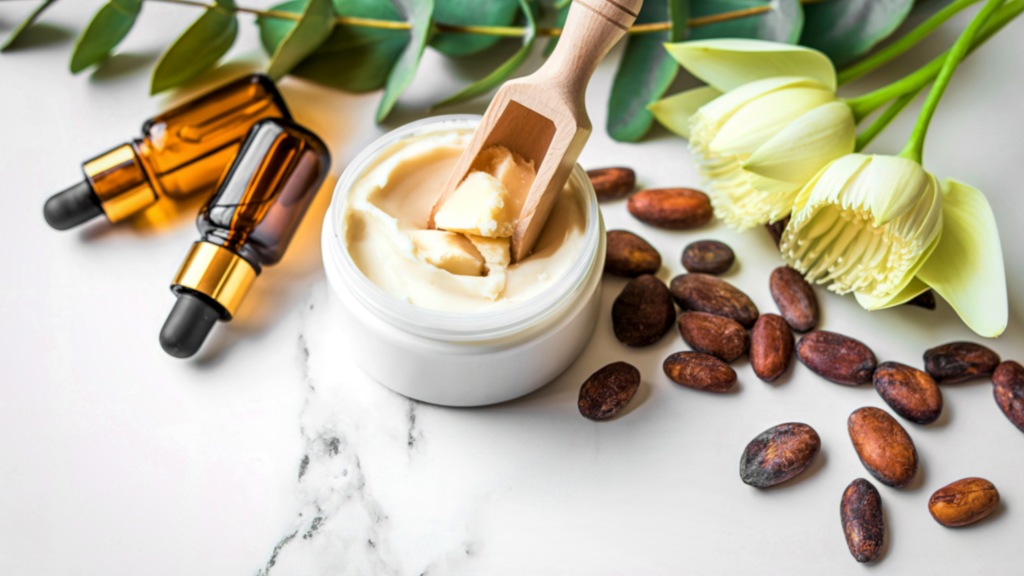
Yes, you can use raw shea butter by itself. No mixing, no melting, no fancy equipment required.
The trick is in the technique. Scoop a small amount (about the size of a dime for your body, a pea-sized amount for your face) and warm it between your palms. The heat from your hands melts it into a smooth oil that absorbs much better than trying to rub a solid chunk directly onto your skin.
A few tips before you start: less is more with shea butter because it's very rich. Apply it to damp skin right after showering, and it will absorb faster and leave less residue.
For Skin:
- Body moisturizer: Focus on dry areas like elbows, knees, and heels where skin tends to get rough
- Face moisturizer: Use a pea-sized amount at night (shea butter may feel too heavy for oily skin types during the day)
- Cuticle treatment: Massage a tiny amount into cuticles before bed
- Soothing irritated skin: Apply to sunburn, windburn, or chapped areas
- Baby balm: Many parents use it for nappy rash or general moisturizing on babies
For Hair:
- Leave-in conditioner: Warm a tiny amount and smooth over hair ends to reduce frizz and flyaways
- Deep conditioning mask: Apply warmed shea butter throughout hair, cover with a shower cap for 20-30 minutes, then shampoo out
- Scalp treatment: Massage into a dry, itchy scalp before washing to help soothe irritation
How to Melt Raw Shea Butter (Without Losing Its Benefits)
There's some debate about whether you should melt shea butter at all. Some people say heating destroys the good stuff. Others say melting is fine for mixing and packaging.
The truth is: light heating removes some potency, but not much. The problem comes with higher temperatures, which cause more significant loss of the fatty acids and vitamins that make shea butter so effective.
If you need to melt shea butter for mixing with essential oils, fragrance oils, or pouring into containers, use the hot water bath method. It keeps temperatures low and controlled.
The Hot Water Bath Method:
- Fill a large pan with water and heat to 140-160°F. Use a thermometer to check the temperature.
- Place your shea butter in a heat-safe mixing bowl or sealed plastic bag.
- Set the bowl or bag in the hot water bath. Make sure no water gets into the butter.
- Stir occasionally until the shea butter is fully melted.
- Remove from heat and let it cool. If you're adding fragrance, do it during the solidification stage when it's still liquid but cooling down.
If you plan to whip it, start whipping as it begins to solidify. Do a second whipping about 15 minutes later for a smoother texture.
How to Make Whipped Shea Butter (No-Melt Method)

Many recipes tell you to melt shea butter first before whipping. But here's a better approach: skip the heat entirely.
Whipping raw shea butter without melting it keeps more of the fatty acids and vitamins intact. The texture comes out just as fluffy, and you preserve more of what makes shea butter worth using in the first place.
What You Need:
- Electric mixer (stand mixer or hand mixer both work)
- Mixing bowl
- Clean container for storage
Ingredients:
- 5 oz unrefined shea butter
- 2-3 tablespoons carrier oil (grapeseed oil, jojoba oil, or coconut oil)
- 11-21 drops of your preferred scent (optional)
Instructions:
- Start with room-temperature shea butter. Do not melt or heat it.
- Put the shea butter in your mixing bowl and mash it with a fork to soften it up.
- Add your carrier oil and mash again until the oils are distributed throughout.
- Blend with your electric mixer for 3-6 minutes on medium to high speed.
- Stop when the consistency is light and fluffy, similar to whipped cream or frosting.
- Transfer to a clean container and store in a cool, dry place.
The carrier oil helps create a smoother texture and makes the finished product easier to apply. Grapeseed oil absorbs quickly into skin, jojoba oil closely matches the skin's own oils, and coconut oil adds a light tropical scent.
How to Add Fragrance to Shea Butter
Raw shea butter has a nutty, earthy smell that some people love and others want to cover up. Adding fragrance oil or a few drops of your favorite scent is straightforward once you know the right ratios.
For 5 lbs of shea butter, use either:
- 1.6 oz fragrance oil, OR
- 0.7 oz of your preferred scent drops
Steps:
- Melt shea butter in a double boiler, using only as much heat as needed.
- Remove from heat once fully melted.
- Add your fragrance oil or scent drops and mix thoroughly.
- If the scent isn't strong enough, add more in small amounts (up to an extra 1.6 oz fragrance oil or 0.7 oz scent drops).
- Pour into containers. A 5 lb batch yields approximately 20 four-ounce containers.
Keep in mind that the scent will smell stronger while the butter is warm. It mellows as it cools and solidifies. Also, higher fragrance levels may irritate some people's skin, so start with less and work your way up.
Scents That Work Well with Shea Butter
Lavender pairs well with shea butter's nutty base notes and creates a calming product good for nighttime use. Eucalyptus adds a cooling sensation that many people enjoy in body butters. Lemongrass brings an energizing, citrusy brightness that cuts through the earthiness. Tea tree is popular for targeted skin applications.
Remember that concentrated scent drops should always be diluted properly. The ratios above are a safe starting point, but always do a small test batch first if you're making products for others.
How to Make a Shea Butter Lotion
Want something lighter than straight shea butter? Adding carrier oils creates a lotion-like consistency that spreads easier and absorbs faster.
The basic ratio is: 80% shea butter (about 1 lb), 19% carrier oils (about 3 oz of grapeseed oil, coconut oil, neem oil, or a blend), and 1% vitamin E oil.
Method:
- Combine all ingredients in a microwave-safe bowl or heat-safe container.
- Heat in the microwave using 20-second intervals, or use the hot water bath method, until the mixture is softened but not fully melted. You want it pliable, not liquid.
- Mix with a blender starting on low speed, then gradually increase.
- Don't worry if the shea butter turns slightly green while whipping. This is normal and doesn't affect the finished product.
- When fully whipped, it will look light and creamy.
Store in clean, airtight containers. This lotion-style shea butter works well as an everyday moisturizer and is easier to apply than straight whipped butter.
How to Make a Shea Butter Body Scrub
Body scrubs combine the moisturizing benefits of shea butter with exfoliating ingredients that slough off dead skin. This coffee and brown sugar version smells amazing and leaves skin feeling soft.
Coffee & Brown Sugar Scrub Recipe:
- 1 cup shea butter
- ¼ cup coconut oil (melted)
- ¼ cup olive oil
- ¾ cup brown sugar
- ⅓ cup finely ground coffee
- 1 tbsp coffee extract
- 2 tsp vanilla extract
Method:
- Melt the shea butter in a double boiler, then refrigerate for about 1 hour until it thickens but isn't completely solid.
- Whip the thickened shea butter for 4-5 minutes at high speed.
- Slowly pour in the mixed oils (coconut, olive, coffee extract, vanilla) while beating.
- Fold in the brown sugar and ground coffee gently with a wooden spoon. Don't over-mix or you'll crush the exfoliating particles.
- Store in a glass jar. This recipe makes about 3 cups.
A note on exfoliation: coffee grounds scrub more aggressively than sugar. If you have sensitive skin, reduce the coffee amount or swap it for more brown sugar.
Yellow Shea Butter vs White Shea Butter: Which Should You Use?
Not all shea butter looks the same, and the color actually tells you something about how it was made.
Yellow shea butter gets its golden color from natural additives like borututu root or from traditional preparation methods used in certain African regions. Raw white shea butter (which looks grayish-white, not pure white) is unrefined without these additives.
Refined white shea butter (pure white) has been processed to remove the scent and color, but this processing also removes some of the beneficial compounds.
Quick comparison:
- Yellow: Softer texture, stronger nutty scent, often preferred for deep treatments on dry or damaged skin
- Raw White: Firmer texture, milder scent, works well for sensitive skin and as a base for DIY skincare products
- Refined White: Smooth texture, neutral scent, commonly used in cosmetic formulations where the shea butter smell isn't wanted
For DIY recipes and direct skin application, unrefined options (either yellow or raw white) give you more of the fatty acids and vitamins that make shea butter effective.
How to Test Shea Butter for Purity
If you're buying shea butter, especially in bulk for resale, you want to make sure you're getting the real thing. Two simple tests can help.
Smell Test: Good shea butter smells nutty and earthy, sometimes with hints of chocolate or smoke depending on how it was processed. If it smells like vinegar or rotten food, it has spoiled and should be thrown away. A strong smoky smell (common in traditionally processed butter) can sometimes be reduced by melting the butter over low heat and refrigerating for 24 hours.
Clean Test: Spread some shea butter on a white cloth using a knife, like you're buttering bread. Any dirt or impurities will show up clearly against the white fabric. Here's the thing: all unprocessed shea butter has some impurities. That's normal and actually indicates it retains its potency. Heavily processed butter will be pure white and clean, but it's also less effective.
FAQs About Using Raw Shea Butter
Does heating or melting shea butter ruin it?
Light heating reduces some effectiveness, but not dramatically. The bigger concern is high temperatures, which cause more significant potency loss. Use the lowest heat necessary for your purpose, and if you don't need to melt it (like for the no-melt whipped butter recipe), skip heating entirely.
How do I remove shea butter stains from clothing?
Start by absorbing the grease. Apply cornmeal, salt, or cornstarch to the stain and let it sit for a few minutes, then brush off. If the stain remains, work dish detergent into the fabric from the back of the stain, then rinse with white vinegar or hot water. Important: don't put the garment in the dryer until the stain is gone. Heat sets grease stains permanently.
Should you refrigerate raw shea butter?
Refrigeration isn't required, but you should store shea butter in a cool, dry place below 75°F. Keep it in airtight containers to prevent spoilage. Properly stored shea butter can last 18-24 months.
What should I NOT mix with shea butter?
Avoid adding shea butter directly into liquid lotions without an emulsifier. Because shea butter solidifies at room temperature, you'll end up with small chunks floating in your product instead of a smooth consistency.
Who should avoid shea butter?
People with tree nut allergies should use caution, though allergic reactions to shea butter are rare. Anyone with very oily or acne-prone skin may find pure shea butter too heavy for facial use. Always do a patch test on a small area of skin before applying it widely.
Can you use raw shea butter on babies?
Yes. Unrefined shea butter is a single-ingredient product that's generally considered safe for babies. Many parents use it for nappy rash, general moisturizing, and even as a belly balm during pregnancy. As with any new product, test a small amount first to check for reactions.
Tips for Reselling Shea Butter Products
If you're creating shea butter products for your business, buying in bulk makes a big difference to your bottom line. Purchasing wholesale shea butter in 5 lb blocks or larger significantly lowers your cost per unit compared to smaller quantities.
A 5 lb batch of scented shea butter can yield around 20 four-ounce containers, giving you plenty of inventory from a single production session. Consider offering both scented and unscented options since some customers prefer the natural nutty smell while others want something fragrant.
For packaging, use clean, airtight containers that protect the product from air and moisture. Store your finished products below 75°F and away from direct sunlight to extend shelf life. Clear labeling with ingredients and usage instructions helps build customer trust and encourages repeat purchases.
Ready to start making your own shea butter products?
Africa Imports offers bulk shea butter in multiple sizes, from sample quantities to wholesale blocks. We've been supplying small businesses across the U.S. for over 25 years with ethically sourced ingredients that help you build products your customers will love.